Skeuomorphism

There’s been a lot of debate in the design world lately about skeuomorphism. You may not be familiar with this term and I have to admit that it was new to me until a few months ago. By the way, it’s pronounced skyoo-a-morf and comes from the Greek words for tool and shape.

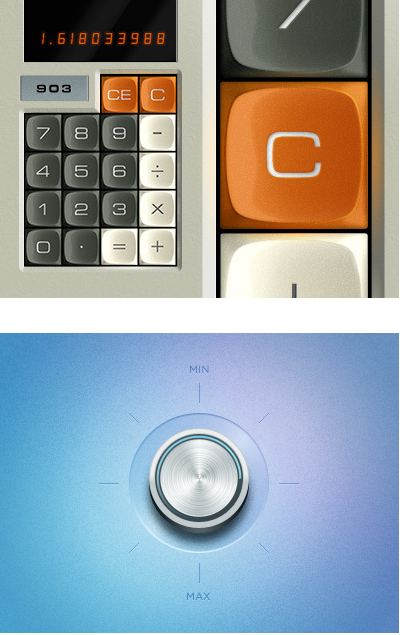
Basically, skeuomorphism is when some or all of the elements in a design look like the objects that they represent, rather than having a flat representational design. Skeuomorphic objects have digitally created textures (for example simulated woodgrain or leather stitching) that look just like the real thing.

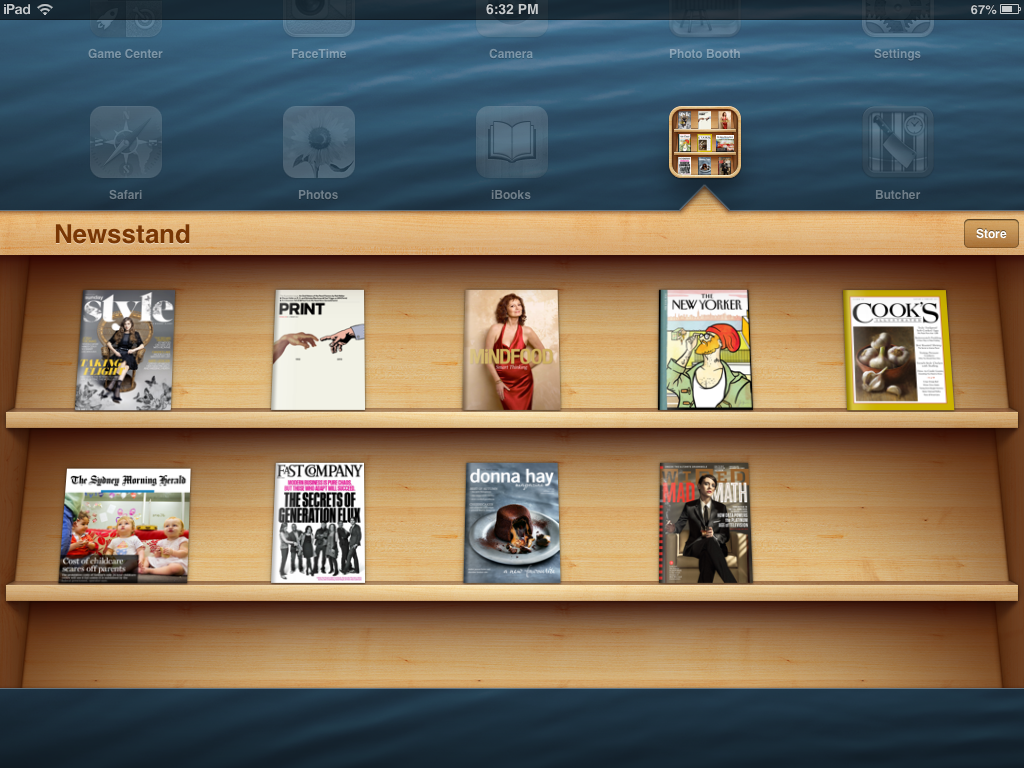
Probably the best way to explain this is by giving you some examples. The most obvious one that comes to mind is the classic iBook bookshelf.
skeuomorph
Classic example of a woodgrain texture
Skeuomorphic design
Just like the real thing.

Skeuomorphic designs are used used to give people the impression that the app or website is friendly and easy to use. Because we are familiar with the object being represented (we all know how buttons work after all),  we unconsciously believe that our interaction will be positive.

So why is there a debate?

Let’s start off by saying that in the design world  there are always debates between minimalists (people who like clean uncluttered design) and those who like more flourishes. I probably fall into the first category as I have quite a fondness for white space. Whilst I think that skeumorphic designs are friendly, (and very clever from a graphic design perspective), I don’t always find the apps on my iPad that easy to use and I often find this quite frustrating. It’s as if someone has put a lot of effort into making something look easy to use, but the reality is that sometimes it’s not really all that obvious how the darned thing works. It’s kind of like the app is saying ‘I’m so easy to use, any fool can work this out’ – except me, apparently. When I try and use an app with a lovely friendly interface, and I can’t figure out how it works, it’s somehow more frustrating than when I try to use an application that looks complicated.

Skeuomorphic design is definitely going out of favour in the graphic design world and flat design is coming back in, however it’s still really big in the e-learning world and it’s finding favour in presentation design lately. I’ve been seeing a fair few blackboards and corkboards popping up in presentations recently, so if you are looking for something to spice up your presentation you could have a play around with skeuomorphism. At least you’ll know how to pronounce it!


Enhanced by Zemanta

Finding focus

I’m guessing that most of us have spent at least a little bit of time recently deciding what we will focus on, and what skills or interests we want to develop in 2013.

I don’t know about you, but one of my biggest problems is that I am interested in way too many things, to the point where I flit from topic to topic always hungry for new and interesting ideas but not really digesting or absorbing very much. And while this is very entertaining, it results in knowing a little bit about a lot of subjects, but not being an expert on anything in particular. This is not a good thing in the world of business (so they say), which favours those with marketable expertise.

So this year I am going to focus on being more focussed.

This means finishing one book before starting another. (Well maybe I can have one fiction and one non-fiction on the go, but not five at once).

Attention
Attention (Photo credit: aforgrave)

It also means spending more time writing about practical ways that you can craft your material so that your messages are clear.

This doesn’t mean that I’ll only talk about one thing. As far as I am concerned, there are many elements to clarity. Regardless of whether you are writing a report, creating a presentation or designing a website the principles and elements are the same.

You need:

  • Clear concise writing that makes sense to the reader
  • Consistent and logical ordering of your content
  • Plenty of white space so that your text is legible and doesn’t overwhelm people
  • Graphs, charts and illustrations that help people to understand your message
  • An understanding of how people learn and how they make sense of information

But above all, you need to KNOW what it is you are trying to say. Working this out is by far the most important thing you need to do and is the place where you should start.

So my plan for the coming year is to focus on writing helpful, inspiring and practical blog posts. What are you going to focus on? Are there skills that you want to develop and can I help you?


Enhanced by Zemanta

How to win friends and influence people

How to Win Friends and Influence People
How to Win Friends and Influence People (Photo credit: Wikipedia)

Yesterday was the birthday of Dale Carnegie who was born in Missouri in 1888. He came from a very poor family but became famous as a writer and lecturer, motivational speaker and marketing guru. I guess you could say he was the father of public speaking (if you don’t count Aristotle of course). Let’s just say that he was the first person to have the idea that salesmen (and I use that term deliberately) needed to have more than a product to sell in order to make a sale. They need to be able to convince people that they couldn’t do without the product they were selling. They needed to be influential.

His best known book was “How to win friends and influence people”. It was first published in 1936 and is still in print. Carnegie’s ideas probably seem very commonplace today but his ideas were radical in the early 20th century. One of his key ideas is that it is possible to change people’s behaviour towards you, by changing the way you react to them. He thought that you could influence people by getting them to like you. The more they like you, the more likely they are to respond to you in a positive way and this in turn will lead to them being more likely to buy what you are selling or agree with what you are saying.

To be honest, I have always found these ideas to be a little creepy. I always believed that people should be genuinely likeable and not just for the purpose of influencing me, or selling me something. But it’s true that I am more likely to listen to the ideas of someone I like. It puts me in a more open frame of mind.

If you are writing presentations, reports or even just emails to your colleagues you probably want people to do something, or feel something, otherwise why would you be taking the trouble to write anything? And if you want people to do or feel something, then it helps if you are likeable.

So can you make yourself more likeable and still retain your integrity? Yes, I think so.

One easy thing you can do is to adopt a positive attitude about life. People quite like to be around positive people. I don’t mean that you should pretend to be happy if you are feeling really down, but adopting a positive attitude not only makes people around you want to talk to you, it also makes you feel more positive about life. This is the ‘fake it till you make it’ scenario and the science says that this really works. Watch this TED talk to find out how.

Secondly, spend as much time as you can listening to other people. Giving people your attention and listening closely to what they say is both respectful and flattering. I am not always very good at listening (coming from a family of champion interrupters as I do) but I do find it very effective when I can manage it.

If you agree/disagree or have any other tips for influencing people without selling your soul, please comment. I’d love to hear from you.

I’ll leave you with a nice quote from Mr Carnegie…

Happiness doesn’t depend on who you are or what you own, it depends solely on what you think.

Dale Carnegie 1888 -1955

Let’s try that again

This is a great example of creativity.

<div style=”margin-bottom:5px”> <strong> <a href=”http://www.slideshare.net/CJAtherton/chris-atherton-at-bettakultcha-leeds&#8221; title=”Chris Atherton at @Bettakultcha Leeds” target=”_blank”>Chris Atherton at @Bettakultcha Leeds</a> </strong> from <strong><a href=”http://www.slideshare.net/CJAtherton&#8221; target=”_blank”>Chris Atherton</a></strong> </div>

Not really that creative


HB graphite pencils Deutsch: Bleistifte der St...
HB graphite pencils Deutsch: Bleistifte der Stärke HB (Photo credit: Wikipedia)


When I am delivering my presentation design course a lot of people tell me that they would love to develop their design skills but that they are ‘not really that creative’. As I have mentioned before, I find this quite amusing as I am not really that creative myself. Some people are born with flair, but most of us have to work at developing their design skills. It certainly doesn’t come naturally to me.


About eighteen months ago I enrolled in a Bachelor of Graphic Design course so that I could develop my design skills. Since then I have struggled through the course, one subject at a time, and I must say it’s not talent or good results that makes me continue, just dogged perseverance and an unwillingness to give up or give in. I’m not sure if I am improving or becoming more creative, but I am learning a lot and I think that putting the principles into practice must surely pay off in the long run. At the rate I’m going, I’ll be studying for the next ten years or until I think I have a good enough grasp on the subject matter to forge ahead under my own steam.


What I have noticed since I started the course is that I’m a lot more tuned in to design. I notice colours and patterns. I appreciate beautiful packaging, I admire wine labels and linger over well designed websites. I see a lot more beauty around me and I think that’s a good thing.


I think one of the tricks to being creative is to develop an appreciation of what works and to be able to articulate why something works, rather than just liking it. My design course has helped me do that by introducing me to the rules and principles of the craft. Writing this blog has also provided me with the opportunity to share some of the things I’m learning about.


I would be very interested to know what you think about creativity. Do you have any thoughts on this topic or are there any topics that you think I should be writing about? I’d love to hear from you.


Should you use a PowerPoint template to spice up your presentation?

At my workplace we are compelled to use a corporate template, but I am guessing that a lot of you might have the freedom to create your presentation on any old background that you choose? If this is the case, you might be wondering if its a good idea to use a snazzy template to improve the look of your presentation and give it a bit of zing, or whether you should stick with something more conservative?

As usual, the answer is IT DEPENDS.

It depends on where and when you will be presenting and who will be in the audience. A very conservative audience will not necessarily be impressed if you come up with slides that look too different.  If you are selling an idea or a concept, you don’t want to antagonise or distance your audience. You don’t want to be too different from them or they will not trust you or what you have to say. My advice is to find out what they are accustomed to seeing and then deliver something vaguely similar, but better. What you want to achieve is for them to feel that you understand their world, but that you can offer a beter alternative or solution to their problems.

It also depends on whether your background is going to distract your audience from your key messages. Your key aim is clarity. This doesn’t change. Every audience needs to be able to understand what you are saying and you need to be as clear as possible about this. Cluttering up your slides with pretty but irrelevant backgrounds will not help and nor will it disguise a lack of content or poorly organised content.

If you have the luxury of choosing a background theme or template, I would suggest that you choose something subtle and appropriate. This can be achieved through a careful choice of colour and I’ll talk about this next week.

If you have any questions or comments, feel free to share. If you are struggling with where to start or how to improve your presentations (or documents, as the same principles apply) please contact me.

What should you be reading?

You can always learn something new about presentation design, even if you have been doing it for some time. I have read quite a few of the presentation design books on the market so I thought I would talk briefly about a few of my favourites and you can decide for yourself if they would be useful for you to read.

My number one pick for people starting out in presentation design would definitely be The Non-designers Presentation Book  by Robin Williams (not the comedian).

This is a fairly short book and covers clarity, relevance, animation and plot as well as the fundamental design principles: contrast, repetition, alignment and proximity. So basically it covers CRAP + CRAP.

I particularly like what Robin has to say about handouts. Rather than advising presentation designers to avoid providing handouts because they distract the audience, she advises us to create handouts that augment the content. This can be a good way to provide attendees with additional useful content as well as a permanent record of your presentation. However you can’t simply convert your presentation slides to a handout and hope that this will do the trick. It won’t. You need to craft your handout in the same way that you craft your slides and use the same design rules. This can take a heap of time and is not something that you can realistically do for every presentation, however it’s a great idea for a presentation that is going to be used across an organisation or that you are planning to deliver on multiple occasions.

There are many other fantastic tips and hints in this book, so if you want a really well written book on presentation design and can only afford one, you should think about purchasing this one. It’s not as flashy as Presentation Zen and Presentation Zen Design (both of which are beautiful) but it’s good.

Look out for next week’s post on good design books and please let me know if you have any personal favourites.

Fresh new look

One of the rules of blogging (apparently) is that you should maintain your branding so that people recognise your brand instantly. That means keeping the look and feel the same as well as keeping your tone of voice consistent. However, I’m not very good at keeping to the rules and I was feeling a bit glum so I thought why not have a whole fresh look? Also, I’m not a brand, I’m a person, so there you go. What do you think? Do you like the new look? Does it confuse or amuse?

Basic Principles USING IMAGES

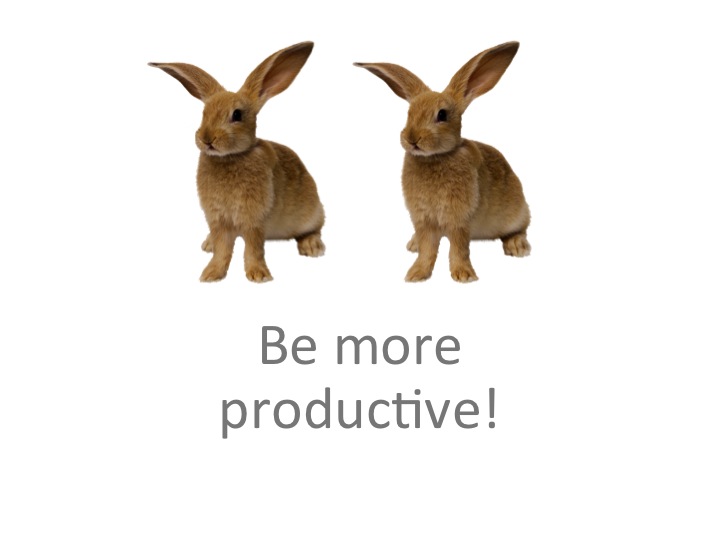
Many people like to include images in their presentations but struggle with choosing appropriate pictures. You need to think carefully about the message you are trying to convey to your audience and choose images that are interesting but not too clichéd.  I once made a presentation about productivity and included a picture of some rabbits. This went down well with most of the audience, but a couple of people looked slightly confused.

There are a few basic principles about using images I’d like to share with you:

  1. Always use high quality images – this means no cheesy clip art.
  2. Use relevant visuals and try to avoid decorating your slides. This isn’t a definite no-no, as sometimes a few pictures can provide a bit of interest and break up the text, but it’s better if you can use images that reinforce your content.
  3. Don’t squeeze or stretch your images. If you need to re-size your images, always hold down the SHIFT key and adjust the size from the corners. This will ensure that the height and width ratios are maintained.
  4. Don’t steal images from the web. You should use licensed or free high quality images. There are lots of places to get these at a reasonable cost. Just search for ‘free photos’ or check out some photo libraries such as Shutterstock http://www.shutterstock.com/ Alternatively, you can shoot your own images on a good digital camera. I’ll  talk more about this in future posts.

Do you have any other tips for using images in presentations?

I’d love to hear from you.

Basic Principles TYPOGRAPHY

There’s a lot I could say about typography (just ask my family!) but let’s start with some basics.

First of all typefaces have personalities of their own. Plain typefaces send the message that they mean business because they are no-nonsense in their look and feel. Curly fonts tend to be whimsical and romantic. These are the ones you usually see on wedding invitations and personal emails.

Type must be appropriate for the topic, be sympathetic to any images nearby and be suitable for the intended reader. Until recently, there was a view that sans serif fonts – those without pointy ends, such as Arial – were easier to read than serif fonts. Whilst this might be true as a general rule, some recent research suggests that the typefaces we find the easiest to read are those that we grew up with. In other words, the fonts that were in use when we were learning to read, remain the easiest for us to read. Type faces reflect social conditions and go in and out of fashion, just like wedge heels.

You’ll notice that I’m using the terms font and typeface interchangeably here. They aren’t actually the same thing, but the explanation is rather long and tedious so I’m not going to go into that now. Suffice to say that you need to choose your typefaces carefully. Don’t write a board report in comic sans, it just doesn’t send the right message about you or your topic.

You’ll be seeing more about typography in future posts, so stay tuned.

Love Story