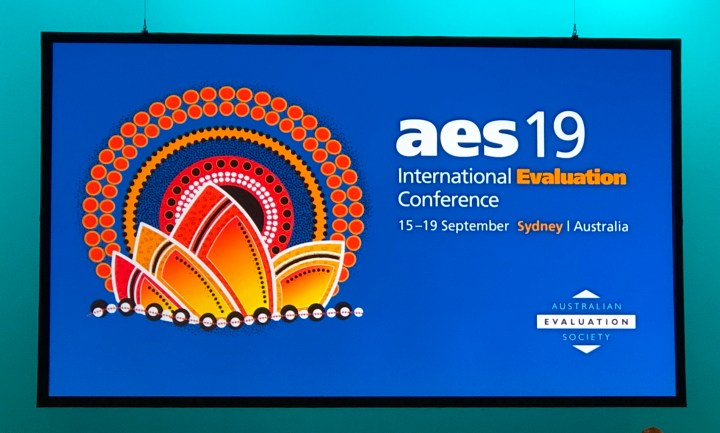
I’m sorry if you can’t read this

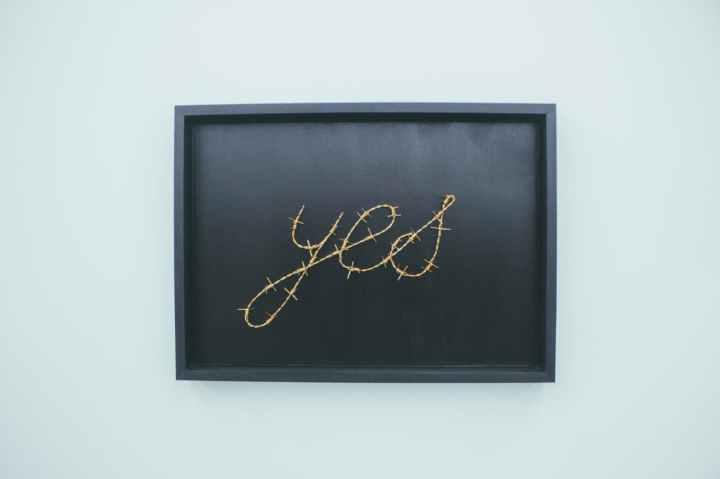
I’m sorry if you can’t read this

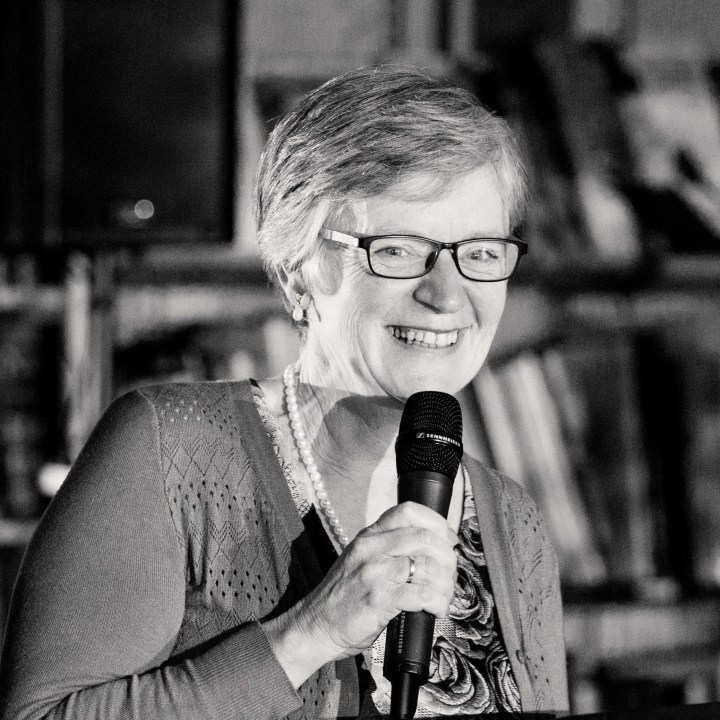
A few weeks ago I mentioned that I was going to be doing a short presentation at the Australian Evaluation Conference in Sydney.

So this week I fronted up (very nervously) and gave my five minute talk on getting past the imposter syndrome. You can watch it here. The sound is a little iffy at the beginning, but you’ll hopefully get the general idea.

I was very anxious about the whole thing so I’m glad it’s over.

But I wanted to talk more generally about the presentations and the communication styles of other presenters at the conference. I’m not suggesting that I’m good at public speaking (far from it – see above for evidence of this) but one thing that did surprise me was that the keynote speakers often seemed to have far too much content for their time-slots. I’m not sure if they were using a generic slide deck or whether they just think they will speak more quickly than they actually do, but in general lots of people ran out of time about half way through. I suppose that it didn’t matter because they were just so fascinating we were eager to hear anything they had to share, but nevertheless it surprised me a bit.

It sometimes felt as though they hadn’t really had time to think about their key messages.

There were a couple of really outstanding presentations. I was particularly impressed with a presentation by ARTD (an evaluation consultancy) who had clearly designed their presentation with the exact amount of information for the allotted time-slot. It was really interesting and really well done. They even had the key messages on a slide at the beginning of the presentation in case people had to leave to go to another session.

A notable thing at the conference was the big variations in slide decks.

The conference organisers had sent out a lot of guidance material about not putting too much details on the slides, but nevertheless some presenters couldn’t resist cramming their slides with a lot of very small text. I don’t think that I’m going to see this change in my lifetime but I would love to think that I’ll never have to hear anyone say “I’m sorry you can’t read this” again.

So there you have it. Overall it was a fantastic conference. I’m so glad I was fortunate enough to attend. Now I just need to go back to work and implement some of these great ideas.

Post #3168: One-sentence reviews for the first half of 2019

Post #3168: One-sentence reviews for the first half of 2019

Thought I’d reblog this list for all of my readerly friends as I know how much you all love reading suggestions. There are some interesting titles on the list, some are already on my TBR, but others are new to me. I’m looking forward to reading “How to be a person in the world” by Heather Havrilesky as well as Curtis Sittenfeld’s collection of essays.

Megan's avatarRed Cedar

Reads and reactions in brief since January 1st, 2019.

How to be Alone – Lane Moore
Essays. Lane Moore is youngish, funny, and figuring out her life. These essays are part of her process.

This House is Haunted – John Boyne
Novel. Forgettable. In other words, I read this in January and can’t remember anything about it.

How to be a Person in the World – Heather Havrilesky
Letters. Havrilesky is Ask Polly and this is a selection of her responses to people who write in asking for help. Compassionate and wise, with lots of tidbits to take away for those of us reading along.

Practical Magic – Alice Hoffman
Novel. Classic chick lit about the witches among us and their deeds committed in the name of love and escape. A quick read, fluffy.  

and also sharks – Jessica Westhead
Short stories. Loved these. Quirky and poignant. Would read…

View original post 1,199 more words

The emperor’s new hat

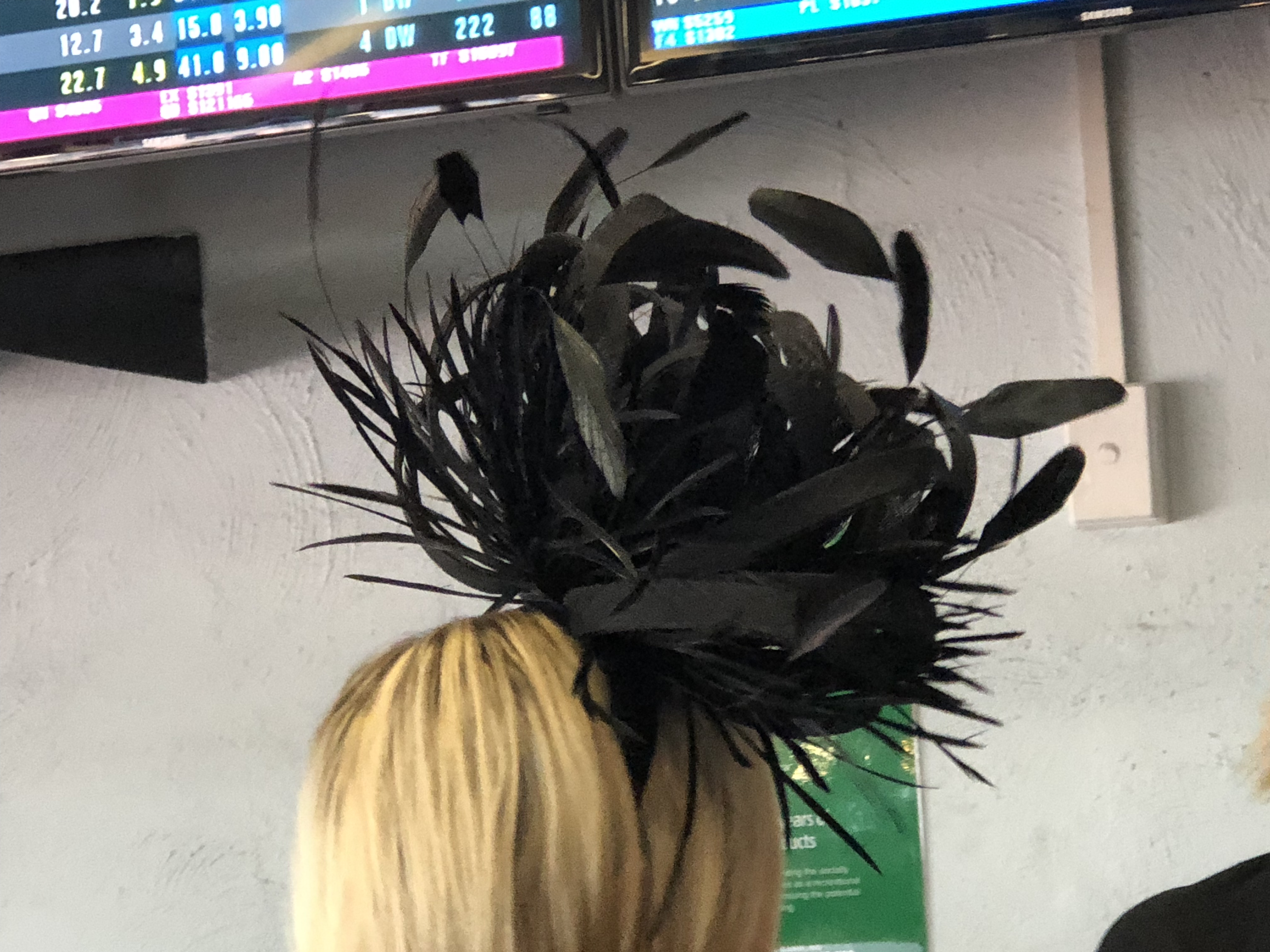
I’m currently on holiday in beautiful sunny Darwin. Last Saturday we have a fun time pretending to be toffs at the Derby Day race meeting. Apart from graceful racehorses, there were also many wonderful outfits to look at and a vast array of headgear on display.

This got me wondering why women wear fascinators (as opposed to hats) especially since so many of them are just downright hilarious. Don’t get me wrong, some of these creations are beautiful, but most just make me laugh.

A small amount of research revealed that fascinators have been around since the 1600s with the first versions being a type of lace shawl with a fastener (hence the name). According to this article, they become newly popular in the 1950s as a cousin to those small pillbox hats made famous by Audrey Hepburn and Jackie Kennedy. My mother wore a beautiful pillbox hat with a small veil at her wedding in the early 1960s.

Fascinators have made a resurgence since Princess Beatrice wore her famous “pretzel” fascinator at the Royal Wedding. Apparently this fascinator became so famous it has its own FaceBook page.

We are going to another big horse race in October and several friends have offered to lend me a fascinator but I think I’ll pass. I might be persuaded to wear a proper hat (maybe not my gardening hat), but I can’t imagine wearing feathers and lace fastened atop my head. Each to her own, but it’s just not me really.

Who are you really?

Who are you really?

I had to write a short bio for an evaluation conference that I’m presenting at in September. I’m actually only speaking for five minutes, but it was on my bucket list to speak at a conference one day, so at least I’ll be able to tick that one off.

I did some research about how to write a bio and the recommendation was to make it relevant to the audience and make it short. This seemed like good advice. I’m a big fan of simplicity, so I generally like things to be short and to the point.

The audience will be other evaluators and my short presentation is about building evaluation capacity when you aren’t an expert, so I decided to just write a couple of sentences about my role and the fact that I like to work collaboratively with people.

I was pretty happy with my efforts until I read some of the other presenters’ bios. By comparison, mine was way too short and simple, so I panicked.

They were mostly written in the third person and there were a whole lot of qualifications being cited all over the joint. The other presenters sound very, very impressive!

You may find it amusing that I panicked given that the title of my talk is “Getting over the imposter syndrome”.

It reminded me of a meeting I went to when I was teaching at the local TAFE. It was the start of semester so we did a ‘go-around’ so that everyone could introduce themselves. I sat there getting more and more anxious (I hate go-arounds) whilst my colleagues cited their extensive academic qualifications and their very important titles. When it came to my turn I said “my name’s Margaret Moon and I’m a person”. I wasn’t trying to be especially funny or rude. It just seemed that this was the best way I could think of to describe myself. There seemed to be a lack of humanity and perhaps humility, in the room.

Back to my bio. In the end I did add a few details. I didn’t want to sound too pompous but I thought that people might want to know a little bit about my background and what kinds of things I find interesting. That list could be quite long if I got carried away, so I just talked about how much I enjoy solving problems and working alongside people. I didn’t talk about how much I love reading and drinking nice wine! That might be a discussion for another time.

I’m hoping that if I sound friendly enough some of the other attendees might come up and say hello. That would be nice.

One thing leads to another

One thing leads to another

Many years ago I started volunteering at a local counselling service. My children were quite small and I remember some people in my family being puzzled about why I would give up my time to volunteer at a not-for-profit welfare agency.

To be honest, I mainly wanted to get out of the house, but I was also interested in learning new skills. They offered an excellent training course with some top notch professionals and it was an offer too good to refuse. On top of that I could choose how many hours I worked and days that suited me. I could also take my toddler with me and she loved playing with the toys and being the centre of attention. All the staff loved her and I thrived in that environment.

One day I saw an ad for a diploma course at the local technical college. I briefly considered enrolling in the course until I realised that since I was already three quarters of the way through a degree in sociology, I was probably qualified enough to teach on the course. I’m still not sure if I was delusional, but I went home and sent off a letter (yes a letter, it was the olden days remember) telling the head teacher that I was available to teach a class at any time! How bold of me!

I heard nothing for six months. Then the head of studies rang and asked me if I could teach a class in social theory starting on the next Tuesday.

Could I? Not sure really, but I said I could. I was probably wildly over-confident and my first lessons were less than fantastic.

That was the start of my teaching career which lasted for ten years. I enjoyed it immensely and when it stopped being fun I left and started a new job. I missed my colleagues who were awesome but it was time for me to explore new territory. More things to learn, more opportunities to expand my horizons.

I often wonder what path my life would have taken if I hadn’t signed up for that volunteer role. I’m pretty certain that I would have missed out on quite a few wonderful opportunities and many great friendships.

So you’re wondering if you should volunteer, just do it. It may lead to something else, or just be a way to give back to the community or meet new people. All of these are good reasons. You won’t regret it.

Euphemisms

Euphemisms

I was reading an article on what to wear on long plane trips and the writer suggested that women should avoid wearing gym pants or tights as they felt that displaying your “fine china” could potentially offend other travellers.

I had never heard lady bits referred to as fine china before and this made me laugh quite a lot, but I do agree that sometimes you can see rather more than you would like to see when you’re standing in a queue at the supermarket.

It also got me wondering about why there are so many euphemisms for female body parts, and also whether fine china is merely rhyming slang for vagina or whether it means that some bits of your body should be valued as one would value fine china.

I found this article by Guardian journalist Annalisa Barbieri where she lists the many names that people have invented to talk to their daughters about their bodies. My favourite euphemism is also sparkly bits.

But back to the gym pants in public question. We’ve just been out for lunch and the beautiful young waitress was indeed wearing gym clothes. It surprised me a little but I have to say that she looked fabulous (she was tiny). I’ve also noticed that when I started going to my Saturday morning exercise classes several years ago I used to wear a skirt over my leggings but now I don’t bother. I just wander down the street in my gym gear along with all the other middle-aged women. To be honest I’m probably older than middle-aged, I’m heading into old lady territory, but I still don’t care. Perhaps its because I’m getting older that I don’t care as much or maybe because it’s so normal now that one doesn’t even think twice. Or maybe its because older women feel invisible most of the time, so they think no-one will notice.

Either way, I don’t think I’d be up for wearing my gym gear on a plane. I’d feel a bit exposed and uncomfortable and I don’t think it would be a kind thing to do to my fellow travellers. I’ll be monitoring what other people are wearing though, and looking out for any displays of fine china!

Do you have any favourite or funny euphemisms to share? Feel free to chime in with your comments.

Better Evaluation

Better Evaluation

I’ve just had an article published on the Better Evaluation website. You can read it here. I wanted to share some ideas about not being an expert while also encouraging people to think about evaluation as something useful and ‘doable’ rather than something that’s too complicated or too hard.

I’m also going to be doing a short presentation on the same topic at the Australian Evaluation Society conference in September. I’m excited but also a little nervous about that. Fortunately, it’s just a five minute “ignite” presentation. Just 20 slides and then on to the next person.

Keep your fingers crossed for me!

Taking time to think

Taking time to think

Easter is a wonderful time to take a break from everything and think about life, regardless of your religious persuasion. I’m taking the opportunity to gaze out the window, admire the garden and take a deep breath. I hope that you get some time to relax and take your foot off the accelerator as well.

Work has been hectic since I went back after Christmas and this blog has been sadly neglected as result. Today I’ve been catching up on my emails and came across this quote from the School of Life about Career Effectiveness.

Fortune favours the quiet thinkers who may, for a long time, have very little to show for their work. Effective people think a lot.

The Emotionally Intelligent Office

I think this is a lovely idea, but not necessarily true. At my workplace I often see quite the opposite. Fortune favours those who can produce results quickly. And although we are often told that staring out the window has value, in reality, it’s not something that you can really get away with at work on a daily basis. We need to be seen to be producing, rather than thinking about what needs to be produced.

And yet having time to think really does have value. It can help us solve problems and ensure that we are focussing our efforts on activities that are useful and productive, rather than just doing “busy work”.

I’m struggling with this a bit because we’ve just got a new system at work that we are using to track the time we spend on various tasks. It’s called a work flow tool (WFT) but I keep accidentally calling it WTF. Every time I do that it makes me laugh.

We are supposed to account for our time (don’t get me wrong, I think this is a good thing) but I sometimes spend quite a lot of time thinking things through and I’m never sure if it’s acceptable to record this as “thinking time” or just hide it under the category of research. Thinking is a kind of research I suppose, because it’s often about discovering what’s in your brain and getting your ideas in some kind of order.

I agree with this final quote from The School of Life article.

Real work often doesn’t look like work. The point of staring out of a window is, paradoxically, not to find out what is going on outside. It is rather, an exercise in discovering the contents of our own minds.

Happy Easter everyone. I hope you get time to read, relax and look after yourself.

Good writing

Good writing

I’ve been a member of the same book group for over twenty years. We’re a small group of women who enjoy reading and we have quite different tastes, which is a good thing.

I often tell people that although we like different books, we all appreciate good writing. But recently someone asked me what I mean when I say that something is ‘well written’. Isn’t this purely subjective? A matter of opinion?

Yes, and no.

A book can be beautifully written, but boring. Some books are too slow or the characters are really unlikeable. (See my previous post for my thoughts on unlikeable characters).

Here are a few things that I think contribute to good writing.

I appreciate well-crafted sentences. I don’t like having to read a sentence more than once to figure out what it means. If I do read a sentence twice, it’s usually because I’ve enjoyed it so much that I want to read it again.

I enjoy writing that is honest but graceful. I like lyrical writing, but I dislike long descriptive passages and tend to skip over them if they are too long. I like stories to move along at a fairly brisk pace.

I like the characters to be complex and multi-dimensional. It’s great when characters have a range of emotions, or mixed feelings. I like to understand their motivations, their fears, and their secret desires.

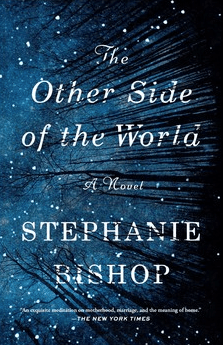
A couple of years ago, my book group read an excellent book by Stephanie Bishop, a West Australian author called The Other Side of the World. Set in England, Australia and India in the early 1960s, the New York times Book Review described it as an exquisite meditation on motherhood, marriage, and the meaning of home. For me, this is the sort of book that encapsulates what I like best. Powerful themes, strong characters and lots of thought-provoking questions we couldn’t really answer in our book group, but we enjoyed discussing.

And yes, we thought it was well written, whatever that means.

Introducing the 2019 ‘Anything Is Possible’ List

I completely understand that this is a fancy ad for WordPress.com, but it’s also really inspiring to read the stories of people using the wordpress platform to do their own thing, build communities and make a difference in the world. Good stuff!

Introducing the 2019 ‘Anything Is Possible’ List