Less news, more puppies: how to protect your mental health

Less news, more puppies: how to protect your mental health

When a new person subscribes to Book Chat, I like to check out what other content they share on Substack. I think of it as audience research. It helps me understand what they are interested in, but I often feel sad when I see people who seem perpetually angry and outraged, sharing content that amplifies these feelings, rather than sharing anything uplifting or positive.

I worry about the mental health of people who are deeply engaged in the latest outrage cycle, whether it’s politics, AI doom-scrolling, or manufactured controversy. As an Australian, I’m particularly unmoved by American political drama, but the pattern is universal: people trapped in loops of indignation.

I rarely watch or listen to the news. I like knowing what’s happening in the world, but I can’t bear how the press sensationalises stories or presents only one side. Over the years, I’ve realised that constant exposure to negative news and political commentary only makes me angry and has no impact on the outcome.

I do believe in protestโ€”both public and privateโ€”when it matters. But sharing outrage on a continuous loop isn’t good for you or your circle of friends. And every minute you spend on negative social media posts tells the algorithm you want more doom and gloom.

That’s why my feed is full of rabbits, cats, dogs, book recommendations, and recipes. I also get posts about cosy home renovations. Sometimes I even see updates from actual friends. I quite enjoy checking my social media feed because I’ve deliberately curated it to show me uplifting stories.

Research confirms that excessive bad news raises anxiety and cortisol levels and disrupts sleep. Covid proved this dramatically.

But what about genuine emergencies? Recently, the Central Coast experienced a devastating bushfire that destroyed 12 local homes. We were safe but concerned about friends and the wider community. In situations like this, staying informed is necessaryโ€”yet the constant news reports, sirens, and helicopters created intense unease.

The South Australia Health Service offers this advice for protecting your mental health during crises:

  • Manage your exposure. Take frequent breaks from news and social media. Choose one reliable source and stick with it instead of channel-hopping.
  • Maintain basic self-care. Eat well and prioritise sleep.
  • Allow yourself to feel. Anxiety during crises is normal. Be kind to yourself.
  • Connect and contribute. Feeling helpless increases anxiety. Reach out to friends, check on neighbours, or ask someone how they’re doing. Small actions help.
  • Focus your mind. Practice mindfulness, meditation, or absorbing activities like crafting, cooking, or reading. Light entertainment works better than anything too demanding.
  • Listen to music. If your concentration skills are low, try listening to some soothing music or anything that makes you feel good.

The goal isn’t ignoranceโ€”it’s balance. Stay informed when it matters, but protect your mental health the rest of the time. Fill your feed with puppies and rabbits. You’ll be better for it.


If you enjoyed this post, you might like Comfort Reading

Find out more about BOOK CHAT here.

You have reached your storage limit

You have reached your storage limit

I got a fake email this morning telling me that I needed to buy more iCloud storage space. I knew it was fake because:

  1. I purchased some extra storage space about three weeks ago, so I should have plenty.
  2. The email address looked very suspicious.
  3. The price was wrong. I know exactly how much extra storage costs.

But the sentiment did make me laugh. Has my brain reached its storage limit, and if so, what am I going to do about it?

Like my wardrobe, my brain is absolutely full of useless information I donโ€™t want or need. It needs a really good clean out.

This morning I was trying to remember the name of the elderly man who used to live next door. Neither my husband nor I could recall his first name, but eventually we realised this was because we always called him Mr Perkins. He was a lovely old gentleman, but his wife was a horrible old bag who could sing like an angel but was otherwise awful. She used to give him a list of jobs every day and then berate him at the end of the day if he didnโ€™t complete them all to her satisfaction.

One day she simply disappeared. We thought maybe he had murdered her and buried her in the back yard but were too nervous to ask. It transpired that she had gone to live in Tasmania. We were very happy to hear this for a variety of reasons, not least because it meant we didnโ€™t live next door to a murderer. One day she came back, moved him into a retirement village and sold the house. He didn’t seem to have much say in the matter and we were sad for him.

Although I couldnโ€™t initially recall the name of Mr Perkins, I knew it was in my brain somewhere, along with the name of my third-grade teacher (Mrs Robertson), and the number of hearts an octopus has (three).

I also struggle to remember my husbandโ€™s mobile phone number. I always have to look it up. I worry that I will be in an accident one day and the ambulance people will ask me for his contact details, and I will just have to shrug and admit I donโ€™t know. I know it starts with 0418 and ends with 918 but I can never remember whatโ€™s in the middle. When I say, “what’s your mobile number again?” he always looks at me strangely. I have saved it in my phone under his name and under ICE which apparently stands for ‘In Case of Emergency’. Perhaps I should also save it under โ€˜husbandโ€™?

I donโ€™t think there’s a good way of clearing out my brain, but I do know that getting adequate sleep is important. I havenโ€™t been sleeping very well lately, and after a night of tossing and turning, I’m very conscious that concentrating and remembering are noticeably more difficult.

Lately I’ve started carrying a notepad and jotting down things I want to remember. I keep a record of films Iโ€™d like to see, wines Iโ€™d like to try, and most importantly, books Iโ€™d like to read. I also use the notes function on my phone to jot down all of the above, plus ideas for articles or things I find funny or interesting.

On the whole, I try not to stress about forgetting things. I met a woman recently who said (quite cheerfully) โ€œOh, I remember nothingโ€ and I thought her attitude was a lot better than constantly worrying and apologising for not remembering.

How did we get here?

How did we get here?

I went to the theatre with some friends recently and the conversation revolved around exercises you can do to keep yourself from falling over when you are going about your daily business. They recommended standing on one leg like a flamingo and spinning around in a circle with your eyes closed to make sure you can keep your balance when the lighting is poor.

โ€œHow did we get here?โ€ I thought to myself.

I still cannot believe that Iโ€™m old. Not ancient, but definitely grey-haired, a bit creaky and wrinkly enough to be deemed an old lady by the rest of the world.

After the show I complemented my friend on her new hairstyle. After several years of dying her hair, she’s allowed it to turn back to its natural grey colour. She went grey years ago (way before it was fashionable) and I thought it looked fabulous. She kept it like that for three years and then suddenly dyed it brown again. I was so disappointed. It looked much more striking when she was grey. Last week she confessed that she started dying it again after an incident where she was standing at the bar and the barman started taking orders from the (younger) women behind her, ignoring her completely.

It was the last straw in a series of events that made her feel old and invisible, so she went home and changed her hair colour back to one which society thought was more acceptable for a woman in her early fifties. She said that as soon as she re-dyed her hair, she found a new romantic partner, so it was worth it. Now sheโ€™s in her late sixties and she no longer cares about what other people think.

We are used to these stories of older women feeling invisible, but to be honest, itโ€™s not something I have experienced as part of being older because Iโ€™ve always felt a bit invisible. As an introvert, Iโ€™ve been okay with that because I certainly donโ€™t enjoy being the centre of attention, but I also don’t appreciate being ignored because someone thinks I’m irrelevant.

Like most women, Iโ€™ve always attempted to do the best I could with what was available, but Iโ€™m not very vain, so I didnโ€™t expect to be bothered this much by the signs of ageing. To be honest, it’s caught me unawares. I can cope with reduced flexibility and the propensity to huff when I bend over, but the wrinkles and looking worn out all the time are starting to annoy me.

I tell myself that I just need a good nightโ€™s sleep or that the lighting is bad, but I know Iโ€™m just getting old. I wonder if I should have invested in some decent night cream about forty years ago. Is it too late to moisturise now?

Iโ€™m relatively healthy and able to do nearly everything I could do when I was younger (albeit a bit more slowly), but I still feel bad when I look in the mirror. And then I feel guilty about feeling bad.

Writer Nora Ephron said that itโ€™s your neck that ages you the most.

You can put makeup on your face and concealer under your eyes and dye on your hair, you can shoot collagen and Botox and Restylane into your wrinkles and creases, but short of surgery, thereโ€™s not a damn thing you can do about a neck. The neck is a dead giveaway. Our faces are lies, and our necks are the truth.

Nora Ephron

Nora, who wrote the screenplays for When Harry Met Sally, Silkwood and Sleepless in Seattle, wrote a collection of essays called I Feel Bad About My Neck when she was in her mid-sixties. She suggests the following strategy.

If I pass a mirror, I avert my eyes. If I must look into it, I begin by squinting, so that if anything terrible is looking back at me, I am already halfway to closing my eyes to ward off the sight. And if the light is good (which I hope itโ€™s not), I often do what so many women my age do when stuck in front of a mirror: I gently pull the skin of my neck back and stare wistfully at a younger version of myself.

Nora Ephron

Iโ€™m not sad about being older, but I feel wistful for my younger self, who doubted herself so much and tried so hard to please other people. Mostly, Iโ€™m sad that I didnโ€™t appreciate myself more. I could have worn prettier dresses, higher heels, brighter lipstick. I guess that wasnโ€™t me, but I suspect I could have had a lot more fun and been kinder to myself.

Shortly after Ephron’s essay collection was published, she was diagnosed with leukemia and died at seventy-one, ending a brilliant career. Reading this reminded me that life is short and if youโ€™re lucky enough to be growing older, go out dancing while you still can. Or learn an instrument. Or walk amongst the trees. Love your wrinkly old body and buy yourself some good moisturiser because it’s never too late until it’s too late.

Plenty

Plenty

I grew up in the Salvation Army and once a year we had a period of a month or so, just before Easter, where we practiced self-denial. The idea was that you went without something you liked, for example, chocolate milkshakes, and gave the money you saved to the church so that they could support their international missions. It was a bit like Dry July, except you couldnโ€™t abstain from alcohol because that was already on the banned list. The self-denial program was a thinly veiled, Protestant version of Lent, and everyone took it very seriously.

People are sometimes unaware that the Salvation Army is church as well as a charity. They have a hierarchy of ministers (called officers) and all the trappings of a religious institution, plus lots of flags and other quasi-military paraphernalia. There are three services every Sunday and a well-defined set of theological constructs underpin their work.

William Booth and his wife Catherine founded the Salvation Army in 1865. Booth was originally a Methodist minister who preached in the slums of London. In this environment, the Booths saw first-hand the effects the consumption of alcohol had on families and the community, hence the rule that all members of the church abstain from drinking alcohol and from dancing, which is thought to lead to lewd behaviour.

Methodism emphasises charity work and support for the sick and the poor, ideals which are known collectively as the Social Gospel, a social movement within Protestantism that applies Christian ethics to social problems, especially issues of social justice such as economic inequality, poverty, crime, racial inequality, environmental degradation, child labour and the dangers of war. These are all social issues that I care about, not necessarily from a Christian perspective, but because I think they are important, but I still think some negative messages have seeped into my psyche, especially in relation to self-care.

As with most Protestant religions, the need to deny oneself pleasure is reinforced strongly in sermons and hymns. You are told that denying yourself pleasure on earth will result in โ€˜riches in heavenโ€™. This could be something as simple as not eating that second baked potato or foregoing a coffee when you are at the shops. If you go without something, youโ€™ll be rewarded. Rather than accumulating wealth on earth, you pay into your heavenly bank account by doing good deeds and being charitable, but also by denying yourself pleasure.

I was talking to a friend about this recently. We both have issues with buying ourselves treats. Chocolates, flowers, exotic fruit and other desirable products, like beautifully scented hand cream. We happily spend our money on things that are deemed necessities, but thereโ€™s some unwritten rule about buying things that arenโ€™t strictly necessary, but add to our quality of life.

A few years ago, I realised I had an issue with spending money on myself. Perhaps this came from my childhood, from too much time sitting on those cold, hard pews listening to sermons. Iโ€™m not sure. When my kids were little, I hardly ever spent any money on myself, but my ideas about what items are luxuries have changed over time.

In years gone by, I would only buy avocadoes occasionally because I thought they were too extravagant. Now I buy one every week along with milk, cheese, eggs, and other essentials. Iโ€™m still up in the air about blueberries. Are they a luxury? Are they a superfood? I accidentally bought two punnets last week when I was doing the grocery shopping online and was relieved to find that they were on special and only cost two dollars a punnet. Bargain!

Lately Iโ€™ve been practicing being more generous with myself and others. Itโ€™s nice to buy things for other people, especially things I know they wonโ€™t buy themselves. Being in lockdown has made this so much easier; there are so many opportunities for online shopping. I try to restrain myself from getting carried away, but then I think, why not spoil yourself? Why not spoil others? Life is short.

I havenโ€™t forgotten to have a social conscience, but itโ€™s tempered with more self-love. And lest you think I’m being critical of the Salvos, let me say that I think they do great work and I’m deeply indebted to them for my deep and abiding love of brass band music.

Slip Stitch

Slip Stitch

A few years ago, I went to Melbourne to visit my daughter and even though Iโ€™d been warned that Melbourne is colder than Sydney; I didnโ€™t take enough warm clothes with me. My daughter had a gas fire, so it was lovely and cosy in her unit, but every time we ventured outside the biting wind tore through my flimsy coat and made my teeth chatter, so we took ourselves off to a thrift shop to see if I could find a warm cardigan.

The shop was in a giant warehouse; the clothes arranged by colour and then size. I saw a young woman pushing a supermarket trolley heaped with crocheted garments. She was wearing one of those string vests and wearing sandals, despite the chilly weather.

I wondered how she was going to get all her purchases home and what she was going to do with all those woolly garments once she got there. I must have made a comment about this because she started chatting to me about how much she loved retro clothes and how she couldnโ€™t stop buying them. She said that she would love to learn to crochet, and I said that she needed to find a granny to teach her. โ€œThatโ€™s why Iโ€™m asking youโ€, she said. I was very surprised because I was only in my late fifties at the time and didnโ€™t consider myself to be anywhere near old, despite my greying hair.

I explained I didnโ€™t live locally, so I couldnโ€™t give her lessons. I didnโ€™t tell her that my skills were rudimentary and that I could only do the most basic stitches. I was still reeling from being mistaken for an old lady and she clearly thought that all โ€˜old peopleโ€™ could knit, sew, and crochet.

In years gone by, this would have been true. My grandmother used to say that her key skills were talking and handiwork. She was a brilliant talker, but an even better knitter in her day. She was one of those women who could watch television, knit, and eat Cadburyโ€™s Milk Chocolate all at the same time. She would glance down at her knitting occasionally if she was casting on or off or working on an armhole, but mostly she could easily handle doing three things at the same time. She only ever watched the ABC and refused to switch over to the commercial channels. It was as if they didnโ€™t exist.

She had a stroke when she was in her seventies and for a long while she couldnโ€™t talk and was paralysed down one side. At first she didnโ€™t recognise anyone except my stepfather, whom she had always disliked, mainly because she thought he wasnโ€™t as good as my father, who had died several years earlier. My stepfather went to see her in the hospital every day after work and helped her to learn to talk again. She changed her mind about him after that.

When she had her stroke, she forgot how to knit and never regained those skills. Someone taught her how to crochet and she spent the next few years making those striped blankets that old people use as knee rugs. She made them from leftover balls of wool in colours that didn’t always match, but it gave her something to do with her hands.

I didn’t inherit any handicraft skills from my grandmother. I start off projects with good intentions but sometimes lose interest when things arenโ€™t turning out the way I want them to. Iโ€™m a terribly slow knitter and have only ever finished one garment, a vest I knitted secretly for my husband during my lunch breaks. I made a smocked dress for my goddaughter when she was a toddler, but it took me about a year to finish that as well.

Iโ€™ve been trying to persuade my eldest daughter to teach herself to crochet. I think it would be good for her to do something that doesnโ€™t involve looking at a screen, but I know that learning a new skill is hard when you are on your own. You really need someone around who can help you when you drop a stitch or get muddled. I pointed her towards some YouTube videos, which have simple explanations, and sent her a ball of practice wool and a crochet hook in case she gets the urge, but I know itโ€™s hard to get motivated on your own. Like quilting, knitting and crochet are pastimes that are often enjoyed with other people, especially when you are a beginner.

Thereโ€™s been a world-wide resurgence of old-fashioned handicrafts over the last few years. Making something with your hands is fun and the repetitive nature of knitting, sewing or needlework is meditative and soothing. It doesnโ€™t stop you thinking, but it gives you something to focus on, which often helps. Plus, producing something tangible is rewarding. So much or our work these days is intangible. It lives on a screen, and we have little to show for our efforts at the end of the day. I think thatโ€™s one reason writers are so excited when they publish a book. Itโ€™s something you can hold in your hands and say, I made this.

Iโ€™ve yet to get my crochet hook out, although Iโ€™m tempted to make something simple. A doll’s blanket or perhaps a knee rug for when I eventually turn into an old lady.

I’m still wearing the nice brown cardigan with the big buttons that I bought for three dollars at the thrift shop in Melbourne.

Tinker, tailor, soldier, sailor

Tinker, tailor, soldier, sailor

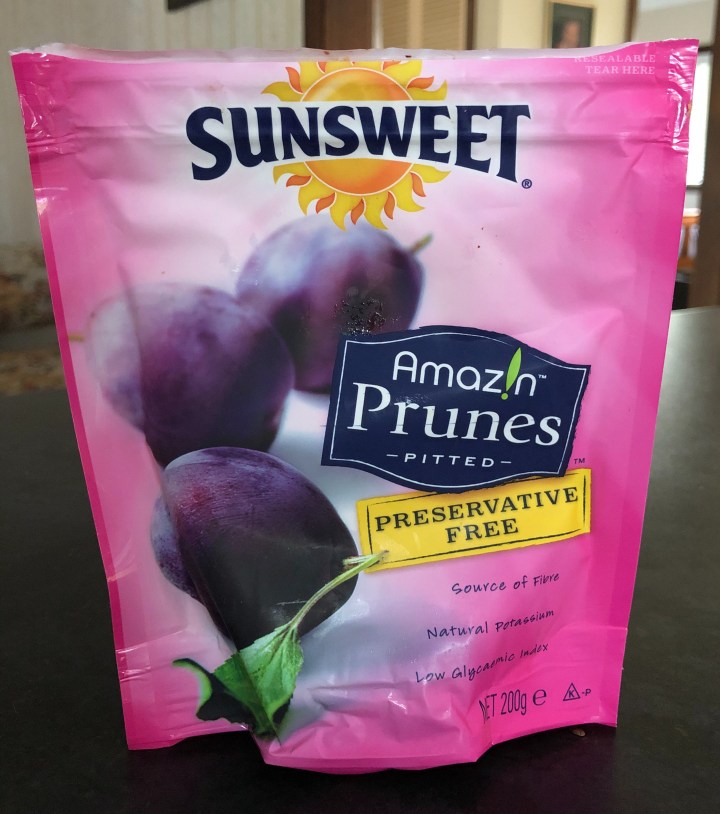
In the olden days there was a lot of emphasis on being โ€˜regularโ€™. People were obsessed with it, especially parents. As children, we had a choice between eating prunes or being dosed with castor oil, a horrible substance kept in a dark brown bottle and meted out to us along with a daily fluoride tablet.

Prunes were also pretty cheap and a good filler if you were feeding a family. We had them for breakfast with our cereal and sometimes for dinner with creamed rice or baked custard. It was common to soak them in a little bit of hot water so that they were less chewy. My mum made terrible baked custard and I still really hate it to this day. Recently, my friend Megan explained to me mumโ€™s custard was probably thin and watery because she didnโ€™t put enough eggs in it, or too much milk, depending on how you look at it. This is probably true, because although she was a good cook, she had a lot of mouths to feed and everything was stretched as much as possible to feed the seven of us.

We always had five prunes, never four, and certainly never six, because that would mean that you were going to marry a poor man when you grew up. The prune stones would be lined up on the edge of the dish and we would recite the followingโ€ฆ

Tinker, tailor, soldier, sailor, RICH MAN, poor man, beggar man, thief. Five was definitely the optimal number.

The number of prune stones also determined what you would wear when you got married.

Silk, satin, rags, bags, and then back to silk. So if you wanted to marry a rich man and wear silk you definitely needed to only eat five prunes lest you jeopardise your future. I still stick to that rule and only ever eat five prunes, even when they have no stones.

I read somewhere that when Barak Obama made the comment about eating eight almonds as a nightly snack, he was only joking. He was tired of people asking him stupid questions about every part of his life. Nevertheless, I have read over and over again that eight almonds are the optimum number for a snack, as though this were an actual rule and not simply an off-the-cuff comment. It made me laugh to think how gullible we are.

It also strikes me that we put a lot of emphasis on counting things. We measure the number of steps we take every day, the number of hours we sleep, the number of calories we consume. Weโ€™ve become obsessed with counting things and unable to judge for ourselves how many glasses of wine we should drink of a night, or how many laps of the pool are enough. I always used to count the number of laps I was swimming until I realised that it was interfering with my capacity to think about other more interesting things. So in the end I just decided that it didnโ€™t matter. I swim until I get tired or my fingers go wrinkly, whichever happens first.

I think that the more we focus on counting, the more we disconnect ourselves from our own inner voice, and the less control we have over our own lives.

Iโ€™m not suggesting that there isnโ€™t an optimum amount in relation to what you consume, only that your body probably knows very well what you need, and it must surely vary from person to person. I donโ€™t see how there can be โ€˜rulesโ€™ that fit everyone, so my suggestion is that we listen more to our own bodies and less to what other people say.

Of course this means that I may have to rethink my five prunes rule and marry a poor man.

Searching for a good night’s sleep

Searching for a good night’s sleep

I’m sure I’m not the only person who’s been having trouble sleeping lately.

I fall asleep easily enough, but I often wake in the middle of the night and work myself up into a state of anxiety about everything thatโ€™s been happening. I go down a rabbit hole of imagining what bad things might happen to family and to the world in general. This is weird because Iโ€™m normally a very positive person.

Ironically, my anxiety is often made worse by worrying about how much sleep Iโ€™m NOT getting. I wake up, look at the clock and do a quick calculation about the number of hours until I need to be getting out of bed and doing something productive and start freaking out because everyone knows we need seven or eight hours a night, right?

Well, wrong apparently.

Although itโ€™s a commonly held belief that you need eight hours of sleep every night, thereโ€™s no real evidence to support this, and when you think about it, it makes little sense that we would all need the same amount of sleep, or that we need exactly the same amount of sleep every night.

Itโ€™s much more likely that we would need different amounts of sleep depending on the amount of exercise weโ€™ve been doing, how old we are, how tired we are, and whether the kids have been keeping us up all night.

I listened to an interesting podcast the other night (when I wasnโ€™t sleeping) on Insomnia Myths and Misconceptions, presented by psychologist Nick Wignall, in conversation with sleep physician Dr Daniel Erichsen, and they had some interesting things to say.

The idea that you need eight hours sleep for optimum health and productivity is based on a study where โ€˜goodโ€™ sleepers (people who say that they wake up well-rested) claimed that they usually sleep for eight hours a night. Scientific studies of these same people showed that they actually sleep for about seven hours a night, but of course it varies from person to person. So the eight hours a night rule is really just what people thought was a good number of hours, rather than being based on fact. But the focus of the podcast was on what causes insomnia and this is the bit that I found interesting. According to Nick and Daniel…

The biggest cause of insomnia is worrying about not sleeping.

Itโ€™s your anxiety about not sleeping that is causing most of the problems. Itโ€™s not the cup of coffee that you had, or the movie you watched on your iPad. Itโ€™s worrying that these are going to affect your sleep. As soon as you start fretting about being awake, you virtually guarantee that you’ll find it hard to get back to sleep.

You also need to stop worrying about waking up during the night. It’s perfectly normal to wake during the night, especially as you get older. In the olden days (prior to the industrial revolution) it was normal for people to have two sleeps every night. They would go to bed early and then wake up in the early hours of the morning and spend a couple of hours talking, playing games, even visiting friends, before heading back to bed for a few more hours of sleep. The invention of electric lights in the late 19th Century made it possible for people to stay up later and it became the norm for people to expect to sleep in one continuous stretch.

It was around this time that someone invented the term โ€˜insomniaโ€™. This caused an explosion of potions and pills to help people get to sleep and stay asleep. It was inferred that there was something wrong if you woke up in the middle of the night, when previously this hadnโ€™t been regarded as a problem.

In his book โ€œWhy canโ€™t we sleepโ€ Darian Leader says that sleep has become a commodity that’s worth billions of dollars. Not only do we have a myriad of medications, there’s the mattress industry, smart watches to track your sleep cycles, and a host of books on sleep science. It’s a big business that relies on people being anxious about their sleep.

So, where does this leave you if you are having trouble sleeping because you are worrying about your business going down the spout, or other genuine possibilities?

Iโ€™m not sure of the answer to this, but I try to distract myself by listening to funny podcasts (try Elis James and John Robins or No such thing as a fish) or by listening to music. It doesnโ€™t block the swirling thoughts entirely, but it reduces my level of anxiety a few notches, and eventually I drop off again. I try really hard to convince myself that even though I’m not sleeping, that’s ok. Having children has taught me you can function reasonably well on a surprisingly small amount of sleep.

If this fails, I try to imagine what Iโ€™d do with a million dollars or other favourite scenarios. You may have your own version of this. It might be designing the house of your dreams, writing a book, or inventing something brilliant. Do whatever works, but donโ€™t focus on what the time is or how long youโ€™ve been awake.

Everyone is understandably stressed and anxious about what the next few months will bring, so rather than stress too much about things you canโ€™t control, be kind to yourself and get some rest when you can.

Best wishes from me to you

xxx

Attitudes to money

Attitudes to money

My father died shortly before my fourth birthday, leaving my mother with three young children, a half-finished house, and no income.

He was 33, a newly qualified architect just starting out in his own business when he died. He designed our home, which was very modern for its time. It was open plan, with a huge kitchen/dining room and a laundry overlooking the front yard. This was very unusual as most kitchens and laundries were at the back of the house in those days. My mother had insisted that she wanted to have a view of the street when she was in the kitchen or doing the laundry. She disliked housework and menial chores (it runs in the family) and didnโ€™t want to be stuck away somewhere at the back of the house slaving over a hot stove in the kitchen or doing the endless laundry that comes with a growing family.

Our family home designed by my Dad, Les Moon.

We had beautiful polished floorboards in the lounge room and a fireplace. This was odd given that we lived in Perth where the winters arenโ€™t really that cold, but we all loved that fireplace and I have happy memories of sitting on my grandmotherโ€™s lap eating hot buttered toast in front of a roaring fire. Weโ€™d crouch in front of the fire with long forks trying to get our thick white bread nice and brown without burning the edges, but we secretly loved the burnt bits. They added excitement and texture, elevating the toast to something magical.

We moved into the house before it was really finished, so when my dad became ill, we had many working bees at our house. Friends and people from our church would come around on weekends to build cupboards, paint walls and hang doors. They even made us a cubby in the backyard from leftover building materials. They fashioned a little front doorstep, and we pushed our feet into the wet cement and put our initials underneath in a neat rowโ€“BJM, in that order, oldest to youngest. As I grew older, I would marvel at how my feet had mysteriously grown large enough to fit into the impressions made by my two big sisters.ย 

Family photo
Family snap circa 1959 – Jennifer, Les, Beverley, Nola, Margaret (L to R)

When my father died, my mum survived by cleaning the local hairdressers, taking in ironing and doing whatever she could to make ends meet. Sadly, her father (our grandfather) also died in the same year, so it was a difficult time both emotionally and financially, but we got used to wearing hand-me-down clothes and eating meals that had been stretched out with cheap fillers like pasta, oats, and bread.

One of my favourite desserts was made from Weetbix layered with apples and sultanas and served with hot custard. Years later, my mother told me she used to make this when there wasnโ€™t really enough of the main course to go around.

Iโ€™ve got no doubt that these experiences have shaped my attitudes towards money and I often struggle to understand how young families can afford to take their young children to the local cafรฉ where breakfast costs $40 or $50 dollars for a family, and thatโ€™s without any smashed avocado!

This isnโ€™t a criticism of young families. I can fully appreciate that times have changed in so many ways, but I find it hard to comprehend that people seem to spend fairly large amounts of money on things that I consider luxuries. I still feel guilty buying take-away coffee even though I can well afford to these days, but Iโ€™m also very aware of where these feelings come from and I know they are hard to shake.

Once when my children were toddlers, my mother sent me a five-dollar note inside my birthday card with instructions to buy myself a cup of coffee at the shops as a treat. She knew me too well. There was no money to spare and it would have been unthinkable to spend money on coffee when I needed the cash to put petrol in the car so that I could get to playgroup.

Now Iโ€™m heading towards retirement and Iโ€™m finding it hard to accept the idea that one day soon my income will drop and Iโ€™ll have less coming into my bank account. Over my career Iโ€™ve transitioned from a well-paid job with the national broadcaster, moving to part-time work with TAFE and back to full-time work when the kids were bigger, but Iโ€™m still thrilled when I get paid every fortnight.

Iโ€™m hoping that when I eventually call it quits, Iโ€™ll have learnt to be generous with myself (and with others) and not get caught up in the fear of not having enough. I know that I have enough, as well as a generous and supportive husband, so these fears are totally unfounded, but it helps me to understand that my fears are rooted in experience.

It also helps to remind myself that being relatively poor wasnโ€™t even a bad experience. We never missing out on anything. We had clean clothes, a nice house, a loving mother and plenty to eat. We were satisfied with our lot, so I hope that as I move towards the next phase of my life, Iโ€™ll be happy knowing that thereโ€™s enough of everything, including money for coffee.

Taking time to think

Taking time to think

Easter is a wonderful time to take a break from everything and think about life, regardless of your religious persuasion. I’m taking the opportunity to gaze out the window, admire the garden and take a deep breath. I hope that you get some time to relax and take your foot off the accelerator as well.

Work has been hectic since I went back after Christmas and this blog has been sadly neglected as result. Today I’ve been catching up on my emails and came across this quote from the School of Life about Career Effectiveness.

Fortune favours the quiet thinkers who may, for a long time, have very little to show for their work. Effective people think a lot.

The Emotionally Intelligent Office

I think this is a lovely idea, but not necessarily true. At my workplace I often see quite the opposite. Fortune favours those who can produce results quickly. And although we are often told that staring out the window has value, in reality, it’s not something that you can really get away with at work on a daily basis. We need to be seen to be producing, rather than thinking about what needs to be produced.

And yet having time to think really does have value. It can help us solve problems and ensure that we are focussing our efforts on activities that are useful and productive, rather than just doing “busy work”.

I’m struggling with this a bit because we’ve just got a new system at work that we are using to track the time we spend on various tasks. It’s called a work flow tool (WFT) but I keep accidentally calling it WTF. Every time I do that it makes me laugh.

We are supposed to account for our time (don’t get me wrong, I think this is a good thing) but I sometimes spend quite a lot of time thinking things through and I’m never sure if it’s acceptable to record this as “thinking time” or just hide it under the category of research. Thinking is a kind of research I suppose, because it’s often about discovering what’s in your brain and getting your ideas in some kind of order.

I agree with this final quote from The School of Life article.

Real work often doesn’t look like work. The point of staring out of a window is, paradoxically, not to find out what is going on outside. It is rather, an exercise in discovering the contents of our own minds.

Happy Easter everyone. I hope you get time to read, relax and look after yourself.

Getting cosy

img_0606I’ve recently come across the Danish concept of hygge. In English it roughly translates as ‘getting cosy’ or more accurately the art of being convivial and relaxed. The Danes claim to have invented hygge (pronounced hoo-gah or maybe hue-gah) and it’s currently a very trendy thing. ย There are nine new books available on the topic in the bookstores for Christmas.

Many of the books on how to do hyyge involve scented candles, open fires, chocolate, red wine and cake (all of which sound great to me) but on a more serious level, getting cosy is more about being kind and comforting to oneself. So whilst hygge is the trendy new thing and will result in many candles being purchased this Christmas, I must admit that I’m more than attracted to the idea of self care.

Self care is about being nice to yourself. Why wouldn’t you? It seems strange that we need to be reminded, but perhaps we do.

One of the nine books has been written by Charlotte Abrahams (definitely not a Dane) who writes…

“Hygge is about taking pleasure in the small things in life: having a cup of coffee; walking in the sunshine or spending time with loved ones. Hygge is about enjoying the moment and feeling content in that moment.”

It sounds very much like a rebranding of mindfulness, but it doesn’t sound like a bad idea.

Abrahams writes that hygge appeals to her because it’s not about denial, it’s about being generous with yourself as well as others. Of course being generous doesn’t mean overdoing the wine, the chocolate, or the cake, but it does mean treating yourself to a walk before work, or spending time with family and friends and generally easing up on yourself.

Hygge makes people nicer and happier. It’s about paying attention to what makes us feel open and alive and I can’t see how this could be a bad thing.

Here’s some more ideas on how to be more Danish.