Less news, more puppies: how to protect your mental health

Less news, more puppies: how to protect your mental health

When a new person subscribes to Book Chat, I like to check out what other content they share on Substack. I think of it as audience research. It helps me understand what they are interested in, but I often feel sad when I see people who seem perpetually angry and outraged, sharing content that amplifies these feelings, rather than sharing anything uplifting or positive.

I worry about the mental health of people who are deeply engaged in the latest outrage cycle, whether it’s politics, AI doom-scrolling, or manufactured controversy. As an Australian, I’m particularly unmoved by American political drama, but the pattern is universal: people trapped in loops of indignation.

I rarely watch or listen to the news. I like knowing what’s happening in the world, but I can’t bear how the press sensationalises stories or presents only one side. Over the years, I’ve realised that constant exposure to negative news and political commentary only makes me angry and has no impact on the outcome.

I do believe in protest—both public and private—when it matters. But sharing outrage on a continuous loop isn’t good for you or your circle of friends. And every minute you spend on negative social media posts tells the algorithm you want more doom and gloom.

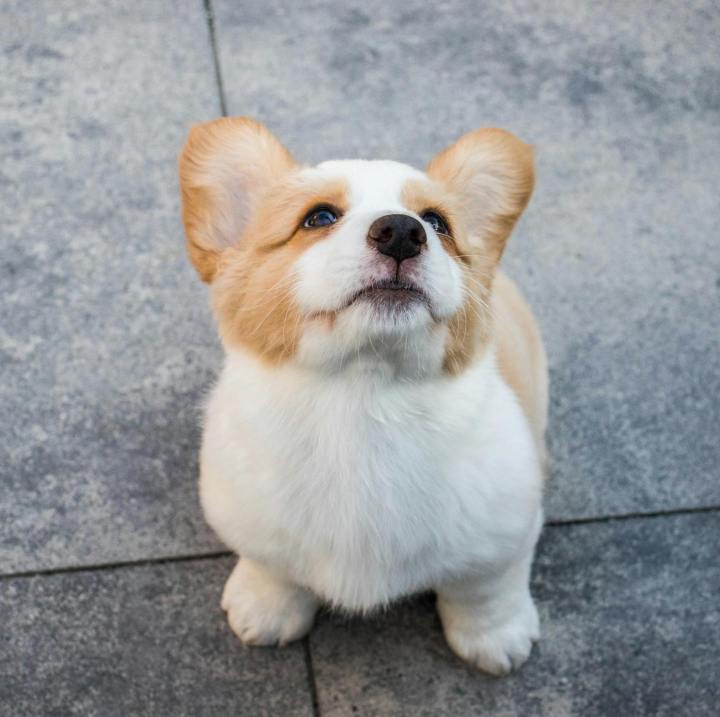
That’s why my feed is full of rabbits, cats, dogs, book recommendations, and recipes. I also get posts about cosy home renovations. Sometimes I even see updates from actual friends. I quite enjoy checking my social media feed because I’ve deliberately curated it to show me uplifting stories.

Research confirms that excessive bad news raises anxiety and cortisol levels and disrupts sleep. Covid proved this dramatically.

But what about genuine emergencies? Recently, the Central Coast experienced a devastating bushfire that destroyed 12 local homes. We were safe but concerned about friends and the wider community. In situations like this, staying informed is necessary—yet the constant news reports, sirens, and helicopters created intense unease.

The South Australia Health Service offers this advice for protecting your mental health during crises:

  • Manage your exposure. Take frequent breaks from news and social media. Choose one reliable source and stick with it instead of channel-hopping.
  • Maintain basic self-care. Eat well and prioritise sleep.
  • Allow yourself to feel. Anxiety during crises is normal. Be kind to yourself.
  • Connect and contribute. Feeling helpless increases anxiety. Reach out to friends, check on neighbours, or ask someone how they’re doing. Small actions help.
  • Focus your mind. Practice mindfulness, meditation, or absorbing activities like crafting, cooking, or reading. Light entertainment works better than anything too demanding.
  • Listen to music. If your concentration skills are low, try listening to some soothing music or anything that makes you feel good.

The goal isn’t ignorance—it’s balance. Stay informed when it matters, but protect your mental health the rest of the time. Fill your feed with puppies and rabbits. You’ll be better for it.


If you enjoyed this post, you might like Comfort Reading

Find out more about BOOK CHAT here.

A bit puzzled

A bit puzzled

A few days before Christmas, my friend gave me a jigsaw puzzle to take home. She pressed it into my hands with such enthusiasm that I couldn’t resist, even though I don’t normally like doing puzzles. I usually get annoyed and frustrated when I can’t find the right piece, but I took it home because I thought having a puzzle on the go might lure my children away from their phones for at least a few minutes. It worked after a fashion, but then they all went home and left me with a pile of pieces, all crying out to find their proper place in the ‘big picture’, and I just couldn’t resist having a go at it myself.

In Australia, Christmas falls right at the beginning of the long summer holidays, a time when I always feel lethargic. The days are long and humid, and I don’t have enough energy to do anything except waft about, complaining that it’s too hot. I start books and abandon them half-way through. I make resolutions I know I won’t keep, and feel vaguely annoyed with myself and the world, so a puzzle was just the thing to give me a sense of purpose.

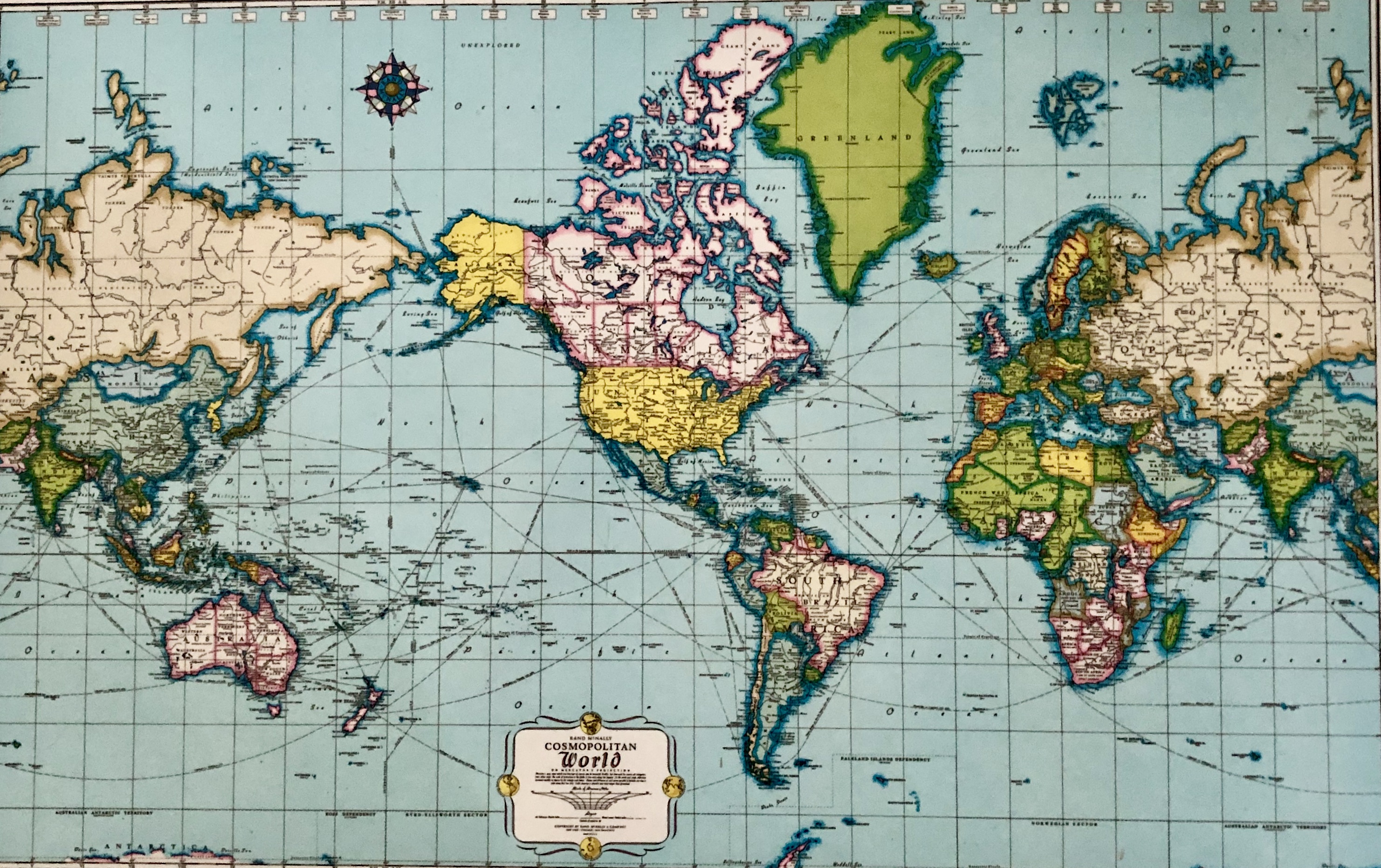
My husband rummaged around in the garage and came back with a piece of hardboard to put the puzzle on. It was a map of the world (circa 1960). It still had lots of pink (Commonwealth) countries. Sri Lanka was still Ceylon, and Tanzania was still called Tanganyika. He flipped it over and it became the perfect place to sort through the pieces.

A map of the world – Circa 1960

When Christmas was over, we moved the puzzle from the living room into my study, where I continued to sit in front of the pieces contemplating life and pretending to myself that I was doing something productive.

My husband would come in to give me encouragement, or advice about how I had too many pieces cluttering up the middle of the puzzle (true). I couldn’t see the wood for the trees. But every time I found a home for piece, I felt good about myself and the world. It made me wonder who invented this curious form of entertainment, and why.

It turns out that John Spilsbury, an English engraver and mapmaker, gets the credit for inventing the jigsaw puzzle in 1767, when he attached a map to a piece of wood and carefully cut out each country. Teachers used Spilsbury’s puzzles to teach geography by asking students to piece the map back together again.

John Silsbury’s dissected map – thought to be the first jigsaw puzzle

In those days, they were called ‘dissected maps’ and weren’t known as jigsaws until the invention of the fret treadle saw (also known as a jigsaw) which was operated with foot peddles like a sewing machine. By 1880, jigsaw puzzles were being machine crafted, and although cardboard puzzles entered the market, wooden jigsaw puzzles remained popular until the 1930s, when the puzzle craze reached its peak in the USA. Manufacturers mass-produced die-cut cardboard puzzles and sold them cheaply enough for most Americans to afford, even in the Great Depression.

Puzzles have enjoyed a huge resurgence in popularity over the last couple of years, for obvious reasons. People are stuck at home and they’re a relatively cheap form of entertainment. According to psychologists, puzzles are very appealing when we are feeling stressed because they give us a sense of control and have a known outcome. They are the perfect antidote to living in a world where everything seems out of control.

I think I’ve changed my mind about doing jigsaws, although I have to say that a lot of them don’t really appeal to me. I might do another one next summer and if I do, it might be this one, which I think is beautiful.

Geode puzzle