Mandarin Summer

Mandarin Summer

Back in the 1980s, when I was working as a film editor at the Australian Broadcasting Corporation, I read a book called Mandarin Summer by the New Zealand author Fiona Kidman.

It’s a coming-of-age story – also called a Bildungsroman in the literary world. If you’re unfamiliar with this term, it literally means ‘a novel of education’, because it tells the story of a character’s formative years. Some well-known examples of this genre include Jane Eyre (1847) by Charlotte Brontë, and The Hunger Games (2008) by Suzanne Collins. Both books feature young protagonists who are about to discover what the real world is all about.

I love books which focus on transformation, and I particularly like coming-of-age stories which feature young women on the cusp of adulthood. They’re not easy to write because the author needs to accurately capture a voice which is sometimes childish, and at other times more worldly.

Set in 1946, Mandarin Summer tells the story of eleven-year-old Emily Freeman, who moves to the Northland of New Zealand with her parents after her father returns from the war. Luke and Constance have purchased a plot of land from the Barnsley family, but when they arrive, they discover the land they have purchased is useless.

During the drought-stricken summer that follows, Emily and her family become embroiled with the Barnsley family, and family secrets are forced into the open. The novel builds to an explosive and satisfying climax, slightly reminiscent of Jane Eyre in that it involves a fire.

When I first read Mandarin Summer, I was captivated by the writing, which is spectacularly filmic. I talked about the book so much that the film director I was working with suggested I purchase an ‘option’ on the rights. Matthew, the director, was a very entrepreneurial Irishman who had made several independent films, and he convinced me that purchasing an option was a great idea, even though I had no experience in being a film producer.

It was very cheap to do this, perhaps only a couple of hundred dollars for a period of around two years. Optioning a book gives the producer (in this case me) time to develop the script and approach funders. During this time, the author cannot grant anyone else a similar option and the producer pays a small fee for the privilege.

Sadly, my real life took over and in the end my option lapsed without me doing any of the required work. I could have renewed it, but it seemed unlikely I would ever get around to doing anything with it. In retrospect, I cannot imagine why I ever thought I would be able to attract backers for a movie, I only knew that the book was extremely visual and would make a great film.

What was strange about the whole situation was that at the time, I didn’t even own a copy of the book!

I’d originally read a library copy (of course) and couldn’t track down another copy. So when we visited Auckland a few years ago, I was delighted to find an old, yellowed copy in a second-hand bookshop and I snapped it up for old-time’s sake. It still sits on my shelf as a reminder of when I had big dreams about doing big things. Inside the book is a faded postcard of a baby Kiwi, a little chap who probably also had big dreams.
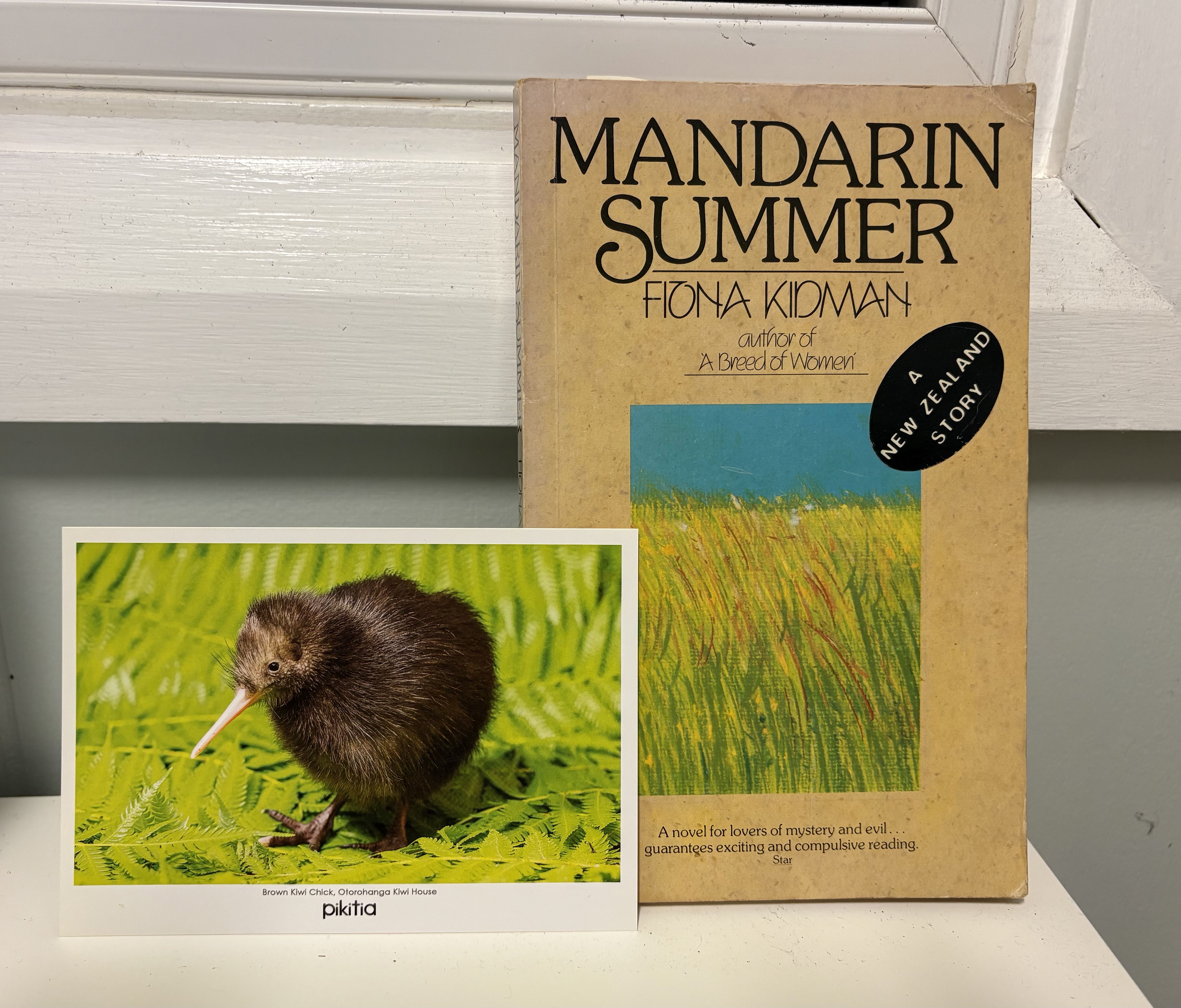
A faded copy of the book Mandarin Summer and a postcard of a Kiwi.

I was delighted to discover that Mandarin Summer is still in print, even though it was never made into a film, as far as I know. It was republished in 2021, and I’m pleased to say that the author, now known as Dame Fiona Kidman, is still writing books and poetry and is a leading figure in the New Zealand book industry. She’s 85 and still going strong.

If you’d like to read my review of a recent ‘coming-of-age’ book, also set in New Zealand, check out BOOK CHAT, my newsletter for readers and eaters.

Should you read the classics?

Should you read the classics?

A friend told me she was trying to read Wuthering Heights but was finding it hard going. I was curious about why she was persevering if it wasn’t her thing. Regular readers know my stance on reading books you aren’t enjoying, but I also understand that people often feel embarrassed if they haven’t read books they think everyone else has, especially if they are classics.

I’m reminded of a scene in a movie where the main character reads Democracy in America (by Alexis de Tocqueville) because she thinks everyone has read it and she feels inferior. It’s only when she’s finished grinding her way through the enormous book and tries to discuss it with her new friends that she finds out no-one else has actually read it. They’re all just pretending and no-one has ever found them out.

And that’s the truth of it. Many people haven’t read Dickens, the Brontës or Jane Austen, and this doesn’t make them any less of a reader, or a person for that matter. My friend definitely doesn’t need to think she doesn’t measure up because she hasn’t read certain books.

To be perfectly honest, I’ve never read Wuthering Heights, but I have seen the movie and the characters always drive me crazy. There are just so dramatic and make totally stupid decisions.

Where to begin?

There’s something to be said for having a crack at something more challenging, but you need to choose carefully. Victorian literature is dense and wordy, so you may need to find a quiet place to really get into the story.

If you’re keen to read one of the classics, but don’t know where to start, I would try Jane Eyre by Charlotte Brontë. It’s a cracking story about an orphan who endures a miserable childhood, then as a young woman gets sent to work in the home of the wealthy and impetuous Edward Rochester. First published in 1847 under the name of Currer Bell, Jane Eyre is a bildungsroman (a coming of age story) that deals with class, sexuality and religion, but it’s also a wonderful love story with a satisfying ending. Along with Pride and Prejudice, and Gone with the Wind, it’s one of the most famous love stories of all time.

The Tenant of Wildfell Hall

Another book I enjoyed is The Tenant of Wildfell Hall by Anne Brontë. Published in 1848 under the name of Acton Bell, it remains remarkably relevant today with its strong feminist themes and portrayal of a woman escaping domestic abuse.

Helen Graham is a beautiful and secretive young woman. She moves into Wildfell Hall with her young son and the locals are desperate to know more about her. A man named Gilbert Markham offers Helen his friendship, but as local gossip and speculation surround her reclusive behavior continue, he wonders if he has misplaced his trust in her.

The shocking details of the disastrous marriage she has left behind emerge when she allows Gilbert to read her diary…

‘A powerful novel of expectation, love, oppression, sin, religion and betrayal’. 

Daily Mail
The Tenant of Wildfell Hall

Middlemarch

A third suggestion is Middlemarch by George Eliot (Mary Ann Evans). It’s a very long book and was originally published in eight instalments. Set in a fictitious town in England in the early 19th century, it tells the story of Dorothea, an intelligent, earnest woman who makes the mistake of marrying Edward Causabon, a man many years her senior. He’s a pompous scholar and bore and his main reason for marrying is to use Dorothea as his personal secretary. Dorothea promptly falls in love with Will Ladislaw, Edward’s idealistic cousin, but tries to remain faithful to her husband, even after his death (silly woman).

I read it many years ago and loved it, but if you really don’t think you can make it through such a long book, look out for TV series (made in 1994) which stars a young and very handsome Rufus Sewell as Will Ladislaw, and Juliet Aubrey as Dorothea.

Why did they use pen-names?

All three novels were published under male pseudonyms, a common practice in Victorian times. Some women wanted to be able to write more freely, others wanted to be taken more seriously. In the case of Eliot, its been suggested that she avoided using her own name because of her elopement with journalist and critic George Henry Lewes, a married man with whom she lived happily for many years.

According to this article, Eliot “relished being thought of as a male and was disappointed when people thought otherwise.” Until Eliot’s first mass publication, The Sad Fortunes of the Reverend Amos Barton in 1957, George Eliot was thought to be male. Eliot was outed in 1958 by a widely circulated letter written by Charles Dickens, who pointed out that the piece was too feminine to be written by a male.

Following Lewe’s death in 1878, Eliot subsequently married her accountant, John Cross and was criticised for this as well. She just couldn’t win!

Want more reading recommendations?

Sign up for Book Chat, a newsletter for readers and eaters.

Comfort reading

Comfort reading

In the latest issue of Book Chat, I wrote about my habit of reading cookbooks when I’m stressed or anxious. I find it calming to flick through the recipes, admiring the photos and reading the stories.

For me, reading a cookbook is not just about looking for new recipes, although that’s part of it. It’s more about getting off the computer, getting away from the news, and simply curling up in bed with a cup of tea and no real purpose. It’s the ultimate in self-care.

As a lover of cake, I’m particularly drawn to books about baking. They have the best, drool-worthy pictures. But I also like vegetarian cookbooks and international cookbooks.

I might end up trying a recipe if it’s easy and I have the ingredients at hand, but mostly I read cookbooks because they let me imagine that I’m a different, more adventurous kind of person. More sociable, more organised. More like my best self.

Cookbooks offer a vision of who you might be if only you had the energy to apply yourself, but they do it in a way that is gently encouraging. They don’t challenge or confront you. They just offer a peek into another world.

Reading A Table for Friends by Skye McAlpine allows me to daydream about being the kind of person who could host the perfect dinner party without getting stressed.

Let’s be honest, I’ve never hosted a proper dinner party, but I think that if I did, I would find it quite stressful. The most I’ve ever attempted is inviting a couple of friends over for dinner, which doesn’t quite qualify in my book. In my mind, a dinner party involves candles, fancy clothes and fancy foods. Think soufflés and chocolate mousse! I’ve cooked for family events, birthdays and Christmases, but that’s more like an exercise in logistics rather than organising something elegant. Mostly it’s just a case of buying enough food and having a variety of dishes, so everyone is happy.

Love is a Pink Cake by Clare Ptak encourages me to believe that one day I will learn to decorate a cake to perfection, or assemble the perfect Swiss Roll. My usual method of decorating a cake is to plonk a bunch of fresh flowers on top, and mostly it works well, but I admire people who can decorate a cake with skill and artistry and I love to think that one day that could be me.

Around the Table by Julia Busuttil Nishimura, reminds me I should really get around to buying some lovely linen tablecloths with contrasting napkins and then I could be a smiley person with a lovely tidy home. I know the photos in these books are staged, but still, they are gorgeously attractive and appealing. Unfortunately, I also have a thrifty streak and I cannot bear to throw away all my perfectly good tablecloths and cutlery, even if they have seen better days.

I imagine I will just stay the way I am, and that’s okay. A person can dream.

It’s okay to stop reading

It’s okay to stop reading

In modern society we put a lot of emphasis on persevering and seeing things through to the bitter end, but this shouldn’t apply to books.

There are some things in life we should do, even if we aren’t enjoying the experience. Eating vegetables, cleaning your teeth, and doing some exercise now and then are all things that are good for us. But finishing a book is neither good nor bad. It’s not a reflection of your character if you choose not to finish a book.

People often tell me they always finish books—they’re known as completists—but I’ve never been able to get them to articulate why they think it’s so important. My guess is that they think there is something honourable about finishing something once they’ve started. They probably don’t have any half-finished knitting projects in the back of the cupboard either!

Good for them, but I prefer to make my reading time count. I agree there’s value in doing activities that require effort and self-discipline, but that doesn’t apply to reading unless you are studying or reading for work. If you’re reading for pleasure, it shouldn’t be a chore. There’s no gold star for finishing a book you aren’t actually enjoying.

I was talking to a friend about this, and she said she often keeps reading because she’s a hopeful person and she likes to think the book will get better. I admire her attitude and agree that you need to give a book a fair chance, but I can usually tell after the first few pages whether a book is for me. I’m getting better at choosing as I get older, but I’m also more ruthless and less likely to spend time on books that aren’t for me.

Sometimes I speed read to the end so I can find out what happens, but often I just stop reading and take it back to the library. I never feel guilty and I’m prepared to accept the possibility that I might miss out on a gem. It will be there in the library if I feel like reading it some other time.

People often talk about abandoning books, which makes them sound oddly like children they no longer care for. But books don’t have feelings and the author will never know you didn’t make it to the end if you keep your mouth shut and don’t start posting negative reviews on Goodreads. Writing a book is hard and just because you didn’t love it doesn’t mean it won’t be perfect for someone else. If we all loved the same books, the world would be a very boring place.

I’m happy to discuss the merits of certain books with my sisters and a few close friends (we can be harsh critics), but I only ever recommend books I like in BOOK CHAT, my newsletter for readers and eaters. I once heard Anne Bogle (book recommender) say she stopped mentioning books she didn’t like because people would often recall the title but forget what she had said about it. They’d see it in a bookshop, buy it, and then message her to say they were disappointed. So when I started my newsletter, I adopted the same approach. I figured my subscribers didn’t need to know what books I hadn’t enjoyed. I read about 50 books a year, but only half of them make it into BOOK CHAT.

I also know that we don’t always ‘enjoy’ books. Some books are hard going and confronting but they open our eyes to other worlds and other people’s experiences. If a book makes you feel uncomfortable, but is well-written, honest and true, then maybe you should keep reading so you don’t exist in a bubble. But if a book is poorly written, with thin one-dimensional characters and a silly plot, or if it bores you, put it down and pick up another. There are literally millions of excellent books in the world, and you only have a limited amount of time.

It’s okay to choose wisely. Read for pleasure, information or inspiration, but don’t make it a chore.

Five star reads – can you trust them?

Five star reads – can you trust them?

 A friend was bemoaning the fact that some books are disappointing despite having glowing reviews on Amazon and Goodreads (owned by the same company, in case you weren’t aware).

It’s hard to judge a book solely on the comments of other readers, especially if you don’t know their reading tastes, and they don’t know yours. Nevertheless, we are often influenced by five-star reviews.

If you’re anything like me, you can’t help wanting to get your hands on books that are getting lots of press and are thrilled when you see a much-hyped new release sitting on the ‘new books’ shelf at the library. You take it home full of expectation, only to find it’s not as good as the hype suggested. It’s so disappointing. What were they thinking giving it five stars? You’d only give it three, and that’s being generous.

There are many reasons books get lots of hype. A book can be genuinely brilliant and deserve all the press (Lessons in Chemistry), or win a prestigious prize (Shuggie Bain), or have a huge publicity budget (Jane Harper). The lead time for a new book is very long, at least a couple of years. During that time, many industry pundits have read advanced review copies (ARCs). Copies of new (unpublished) books are also available from NetGalley, so anyone who wants to make a living as a reviewer or book influencer can log in to read digital copies well before they hit the shelves. And a free copy of a book often equals a positive review, unless you are writing for Kirkus.

A book may not be right for you for many reasons. I snaffled a copy of Carrie Soto is Back (by Taylor Jenkins Reid) at the library last week and only read the first few pages before putting it in my return pile. I’m sure it’s probably an excellent book, but I’m not that interested in tennis or any sports really, so it didn’t gel with me.

It rarely takes long to figure out if a book is for you. With most books, you only need to read the first couple of pages to know that you are going to enjoy it. Others take a while to get going, so you need to read a few chapters before you can really commit. I’ve heard people say you should read seventy pages, but I can usually tell much more quickly.

People are often tell me they always finish books, even if they aren’t enjoying them. This is madness! You should never keep reading a book you aren’t enjoying (once you’ve given it a decent chance, of course). There are so many books out there, just read what makes you happy. If you feel bad about not finishing books you’ve purchased, give them to a little street library so they can find a new home. If they are library books, take them back to the library as quickly as you can so another reader can enjoy them. Don’t keep them by your bedside for weeks and weeks, feeling guilty about not reading them.

I’m getting better at choosing books, but my secret is that I nearly always pre-read the first chapter on my iPad. I have literally hundreds of sample chapters which I browse through regularly. I’m constantly adding new titles when I see interesting books advertised or reviewed, and I subscribe to many newsletters from writerly people and publishing houses. I’m lucky enough to have a circle of bookish friends, so I get to talk about books a lot, and I belong to a family of readers which is very handy. I trust their judgement, but most of all I’m confident they know my reading tastes (and quirks) and will recommend books I’ll probably enjoy.

It might not be the same for you. You might not have the time or inclination to spend hours and hours hunting down new titles, or you might be in that weird situation where there are lots of options, but nothing seems quite right. To be honest, that’s why I started Book Chat (a newsletter for readers). I like to think that by reading widely, I can help people narrow down their options and make choosing easier. I know not everyone has the same reading tastes (thank goodness or the world would be a boring place) but I hope that by providing reliable recommendations you can find a book that’s just right for you.

If you would like some reading recommendations, why not subscribe? If you’re already onboard, thank you.

The man who didn’t wash his dishes

We have a lot of old children’s books tucked away on various bookshelves around the house. Some of them date back to my childhood, others belong to my husband, and some were my mother’s. When our children grew up and moved out, they left all their childhood paraphernalia with us, including many of their books, which apparently we need to keep for them until they have their own houses. That day may never come, given today’s property prices, and if they do miraculously buy a house, I’m pretty sure their old books will continue to live at our place. Why clutter up your own house when you can clutter up somebody else’s?

I don’t really mind because I like re-reading them.

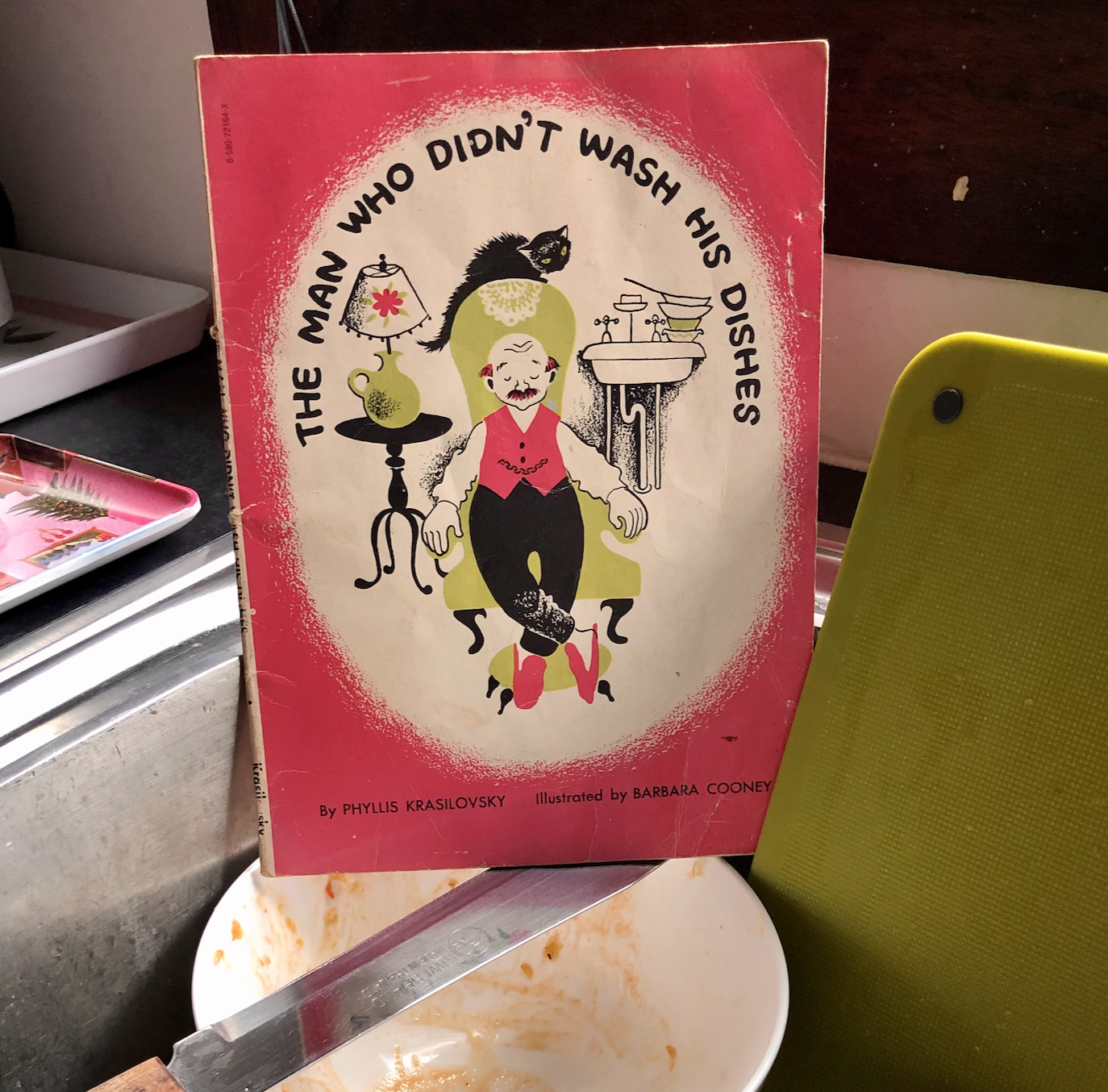
One of my favourites is The Man Who Didn’t Wash His Dishes by Phyllis Krasilovsky. It’s a very thin old book we bought secondhand at a fete for fifty cents. Originally published in 1950, it’s a simple story about a man who eats so much dinner that he goes into a food coma and can’t be bothered washing up. Once this bad habit becomes entrenched, he ceases washing dishes at all, and is forced to eat his dinner from random items around the house, including a vase, a flowerpot and even an ashtray! It always made me laugh.

The Man Who Didn’t Wash His Dishes by Phyllis Krasilovsky, illustrated by Barbara Cooney

I always assumed that this was a little-known book, so it surprised me to discover that Phyllis Krasilovsky wrote over twenty books for children and two novels for young adults. She also wrote humorous articles for several newspapers.

Many of her stories were written for children she actually knew. The Very Little Girl (1953) was originally a birthday card for her sister’s child, and The Man Who Didn’t Wash His Dishes (1950) was written for her husband’s five-year-old cousin who was dying of leukemia. I don’t quite know why a story about a man not washing his dishes is appropriate for a five-year-old child, but my children always loved this story and I have read it many times.

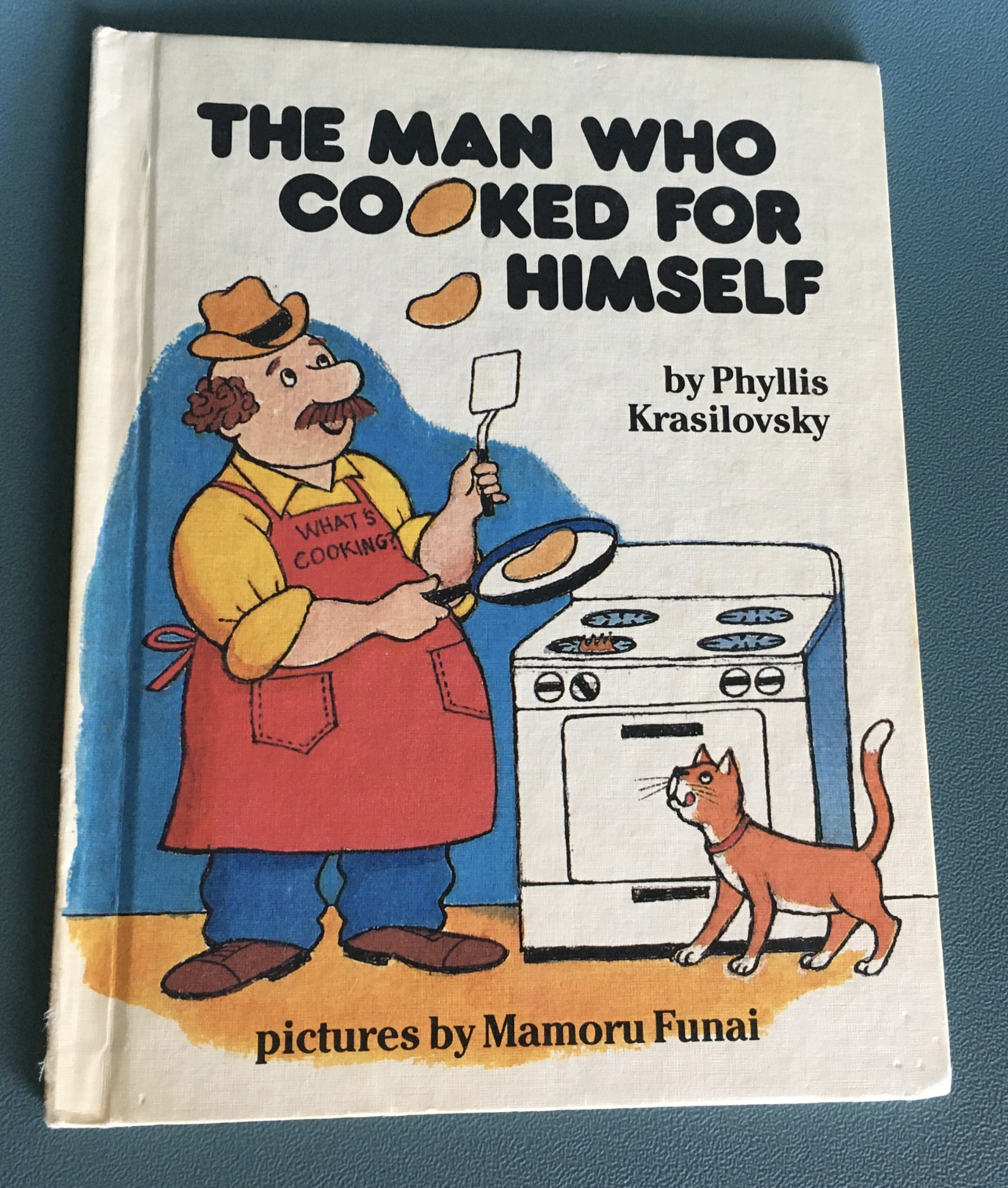
She also wrote the wonderfully titled The Man Who Cooked for Himself , which is about being self-sufficient and begins like this…

There once was a man who lived with his cat in a little house on the edge of a wood. He didn’t have a wife or children, so he always cooked his own supper, cleaned the house by himself, and made his own bed. The man didn’t even have a car or a telephone. But he had a friend who visited him every few days, bringing him the things he needed.

Phyllis Krasilovsky
The Man Who Cooked for Himself by Phyllis Krasilovsky

Phyllis started her career with a bang.

Born Phyllis Louise Manning, she was just nineteen and newly married when she stormed into the offices of Doubleday and demanded to see an editor. Children’s book editor Margaret Lesser heard the confrontation at the front desk, read the manuscript and accepted The Man Who Didn’t Wash His Dishes a few minutes later. I don’t think it would be that easy today. After her husband checked the contract (he was a law student), the couple set off for Alaska in their miniscule car.

I’m not sure if it was this exact model, but their car was too small to travel on the back roads of Alaska and had to be transported on the back of a truck. It reminds me of Noddy’s car.

The couple spent three years in Alaska before returning to settle in Chappaqua, about 30 miles north of New York.

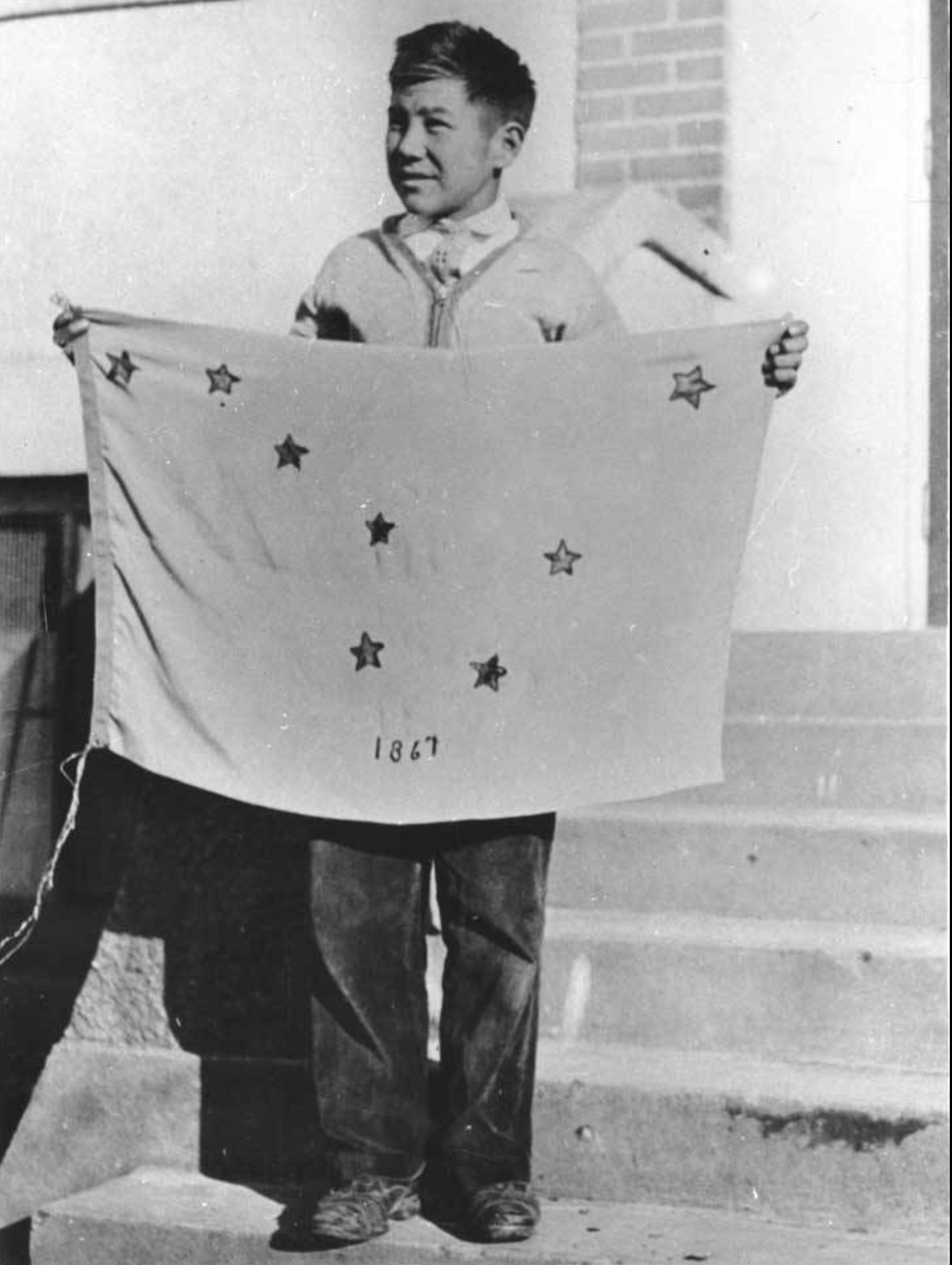
In those days, Alaska was regarded as the last frontier, a bit like the wild west. Phyllis had her first child in Juneau and subsequently wrote Benny’s Flag, which tells the true story of the Aleut boy who designed the Alaskan flag.

In 1927, Benny Benson was 14 years old and living on a mission when he won a contest to design the flag for the Territory of Alaska. He was awarded $1,000, an engraved watch and a trip to Washington, DC. Quite an achievement for a young boy.

Benny Benson with the flag he designed in 1927 – photo from the Alaskan State Archives.

Both Phyllis and her husband, Bill (an entertainment lawyer) were interested in helping people maintain or regain the rights to their work. Bill Krasilovsky represented many well-known musicians including Duke Ellington and Herman Hupfeld, who wrote As Time Goes By.

In the late 1960s, Phyllis was part of an initiative of eminent children’s book authors who pressed for foreign rights to their works to be negotiated separately from domestic publishing contracts. Other members of the group included Maurice Sendak (Where the Wild Things Are) and Margret Rey (Curious George).

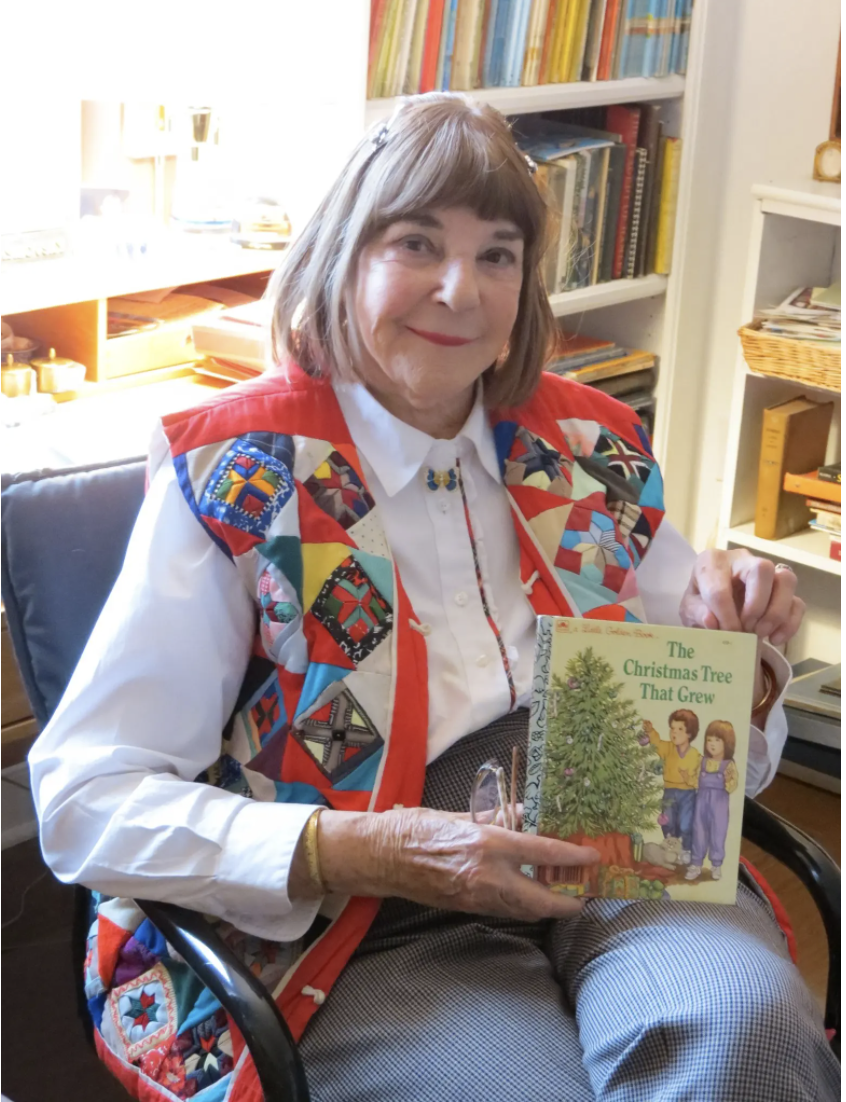
In her later years, Phyllis taught children’s literature in Tarrytown, near New York. She died in 2014, aged 87. I love her quilted vest. It’s very Alaskan.

Phyllis Krasilovsky 1926 – 2014

Reading round up 2021

Reading round up 2021

One of my favourite things to do in December is to check out all the lists of the best books of the year. There’s always a title I’ve missed in my never-ending quest for a great read. It’s good to be reminded about books that have come out during the year, so that I can keep an eye out for them at the library. They sometimes take a while to show up on the shelf.

I’m hesitant to compile my own list of best books, because everyone has different tastes, but I’d like to share some titles I’ve enjoyed in case you are looking for something new to read over the holidays.

This task is usually easy for me because I normally keep a spreadsheet of books I’ve read, but this year I was very lackadaisical with my record keeping, so I’m not sure how many books I got through (and nor does it really matter) but I think it was around fifty. My list peters out in August, so I had to go back over all the issues of my newsletter to find out what I’d read, and when.

When I look back over my reading year, I can see that my concentration dropped a bit in the second half of the year, for reasons that are perfectly understandable, given the strange year that we’ve all had. Sometimes I find it hard to start new books. I wrote about that here.

I read a few romantic comedies (no shame in that) and some books that were definitely a little sweeter than my usual fare. I also gave up on a lot of books because they were not what I was in the mood for. No shame in that either. Life is too short to keep ploughing through a book you aren’t enjoying.

Overall, I think I’ve been a lot more fussy about my reading. I’m less inclined to read what I call ‘worthy’ books (they’re the books people tell you must read) and more inclined to read books that engage me with vivid stories and characters. I’d also like to note that my best reads were all recommended by reading friends or family. It’s good to have friends who know what you like and can recommend accordingly.

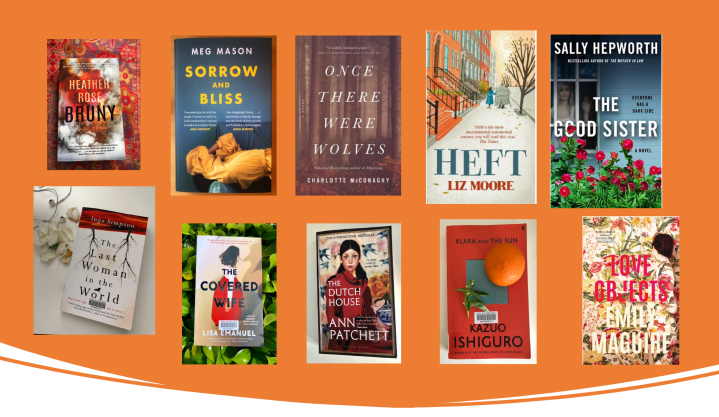
Here are my top ten picks for 2021, listed in the order I read them.

  1. Bruny, by Heather Rose
  2. Sorrow and Bliss, by Meg Mason
  3. Heft, by Liz Moore
  4. The Good Sister, by Sally Hepworth
  5. Klara and the Sun, by Kazuo Ishiguro
  6. The Covered Wife, Lisa Emanuel
  7. The Dutch House, by Ann Patchett
  8. Love Objects, by Emily Maguire
  9. Once There Were Wolves, by Charlotte McConaghy
  10. The Last Woman in the World, by Inga Simpson

What was your favourite book in 2021?

Why you should read children’s books

Why you should read children’s books

During the last lockdown, the staff at our local library drove around hand delivering books to people like me who were stuck at home. I was thrilled when a pile of books magically appeared on the little white table on my front porch, wrapped in plastic and ready to take me to another realm.

I’d requested some children’s books and when they arrived, they came with a brown paper bag containing art supplies for a craft project suitable for three-year-olds. I don’t have anyone of that age at my house, so I gave the materials to a neighbour with two young children, but it told me that the library staff had assumed I had a small person living at my house. Why else would I be requesting picture books?

It would be easy for me to tell you I was doing “research” so that I can find a publisher for my own book, but the truth is that I enjoy reading books for children.

In Katherine Rundell’s book “Why you should read children’s books even though you are so old and wise,” she says…

“Children’s fiction necessitates distillation: at its best it renders in their purest, most archetypal forms hope, hunger, joy, fear. Think of children’s books as literary vodka.”

I love that quote. I should paint it on my wall.

Rundell says that as we get older, our imaginations become dampened and we can’t experience the same wonder that children experience when they see the stars in the night sky or the stark blue ocean. Adults feel these things at a primal level, but we are quick to deny ourselves wonder and joy. We avoid being child-like because it leaves us open and vulnerable. Who knows what other feelings might leak out if we admit to being enthralled or amazed?

Children never worry about what other people think. They shriek with delight when a beetle crawls lightly across their palm, or they see a lizard sunning itself on a warm rock. Everything is wondrous to a three-year-old, but sometimes older people forget to be amazed and become cynical and hard. Reading children’s books gives us a second chance to re-capture the bliss of being a child.

“When you read children’s books you are given the space to read again as a child: to find your way back, back to the time when new discoveries came daily and the world was colossal, before your imagination was trimmed and neatened, as if it were an optional extra”.

Katherine Rundell

Adults want things to make sense and align with their understanding of the world, but children don’t question the logic in stories, even though they are keen to ask “why” about most things in life. In The Tiger who came to Tea, the tiger eats all the food in the house and drinks all the water in the tap. Judith Kerr said that her publishers wanted her to change that line because it was impossible to drink all the water in the tap and that this would trouble children.

How foolish. If children can cope with the idea of walking through a wardrobe to a frozen wonderland full of speaking lions and magical witches, then they can certainly cope with a tiger drinking all the water in the tap.

Writing for children doesn’t mean you need to avoid big words

Rundell’s criterion for cutting words was whether they interrupted the story and not whether they were too sophisticated for children. She went against her editor’s advice and retained façade, abundance and renunciation in one of her books because there weren’t any other words that would do the same job of meaning, tone, and rhythm. But she had limits.

“I cut adamantine, a word I love and think children might also love, because it came at the climax of the story, and I didn’t want to lose even that split-second flicker of time that comes when a reader jumps over an unknown word. I would do the same for adults.”

I must admit that I had to look up adamantine because I was unfamiliar with that word. Imagine my surprise when I found it means ‘having the quality of being adamant’, which is exactly what I thought it meant, even though I was guessing.

Like adults, children understand the meaning of words by seeing them in context. They have good imaginations.

Children’s literature is not a lesser form of writing

Another myth that Rundell explores is that children’s books are easier to write than books for adults. I think they are harder. Children wriggle and squirm if they aren’t fully engaged in a story, but they can also listen to the same book hundreds of times if they like the rhythm of the words. Sometimes they just like snuggling up close to you while you read.

Children are keen to read about feelings and emotions

In the book “Are You My Mother?” by PD Eastman, a newly hatched chick goes out into the world to search for his mother. He doesn’t know what she looks like, so he asks every creature he meets if they are his mother. This includes cats, dogs and other animals. Eventually, a kind friend takes him home, and he finds his mother waiting for him and wondering where he is. This is a book about belonging, something every child (and adult) hungers for. Children can understand deep themes.

I like to read children’s books because they make me feel better about the world. When I’m stressed, or tired or angry, they bring me comfort and take me back to a place where feelings are allowed to be expressed and where values such as love and friendship are deeply held and treasured.

Children’s books get down to the nitty gritty without being pompous, but they are often profound. They’re like poetry. Pure, concise, and true.

Like literary vodka.

And the winner is…

And the winner is…

There’s always a big flurry of activity when the winner of the Booker Prize is announced. This year, The Promise by Damon Galgut won the coveted award for the best novel written in English and published in the UK.

Winning the Booker is a big deal. The winner receives £50,000 and authors who are shortlisted win £2,500. This doesn’t sound like very much, but being shortlisted usually results in a dramatic increase in book sales, so it can transform an author’s career overnight.

But apart from the generous prize money, it made me wonder why the Booker is so important and how it all started.

It turns out that the Booker Prize has a very murky past involving exploitation, slavery and reparation.

Here’s a potted history:

In 1815 Josias Booker arrived in British Guiana, and his younger brother George joined him soon after. George found work as a shipping agent for the export of timber and Josias became the manager of a cotton plantation, where he managed nearly 200 enslaved people.

With the abolition of slavery, which took effect in 1834, the Booker brothers received compensation from the state for 52 emancipated slaves. The Slave Ownership Database at University College London records the total sum as £2,884, equivalent to £378,000 in 2020.

In 1835, George and Richard Booker (another brother) founded a trading and shipping company and established the Booker Line, which focused on shipping goods. Richard Booker died four years later in 1838, leaving Josias and George to increase the business after the purchase of sugar plantations across the colony. At one point, the Bookers controlled 75% of the sugar industry in British Guiana and owned five Booker Line ships. It was common to refer to the country as Booker’s Guiana, rather than British Guiana. After emancipation, the sugar plantations relied on indentured labourers shipped in from Calcutta. This continued for over three quarters of a century, with workers being treated as slaves and living in poor conditions.

In 1952, Jock Campbell took over the chairmanship of the company and his Fabian social politics transformed it into a benevolent force, providing major benefits for sugar workers. Jock Campbell helped to set up Booker’s Author Division, which sponsored the original Booker Prize until 2002.

The modern day Booker has no connection to the family and is currently sponsored by a charitable foundation.

Not only does the prize have a colourful past, the choice of winner is often very controversial. There is often widespread debate about whether the ‘right’ book has won as well as whether the judging panel was diverse enough.

This year’s panel was chaired by historian Maya Jasanoff and included writer and editor Horatio Harrod; actor Natascha McElhone; Professor Chigozie Obioma and former Archbishop Rowan Williams, who is also a poet. A mixed bunch indeed, but the winner was apparently a unanimous choice.

Will I read The Promise? Probably not. It looks too highbrow for me, but I might get around to reading Great Circle, which is very long, but getting great reviews. One of my favourite books this year was Klara and the Sun, which was on the long list, but sadly didn’t make it to the short list.

Do you plan to read any of the books on this year’s list? Let me know in the comments.

A cosy read

A cosy read

One of the great things about being retired is that you can go down a rabbit hole without feeling guilty. This morning I was trying to remember the name of a Scottish novel we read in my book group years ago, so I started tootling around the web looking for “books set on Scottish Islands” and came up with a list of top favourite Scottish crime novels featuring a book called Death of a Liar by M.C. Beaton.

I was delighted to read that Death of a Liar is the 30th book in a series featuring the Scottish police officer Hamish Macbeth. I used to love the TV show which starred a very youthful Robert Carlyle. You can watch some grainy episodes here if you’d like a trip down memory lane. The TV show (featuring a cute little white Scotty dog) aired between 1995-97 in the highly coveted Sunday night drama time-slot, back in the days when we didn’t have control over what was on our tellies and had to watch whatever was on.

I was a big fan of the TV series, primarily because I have a soft spot for Scottish accents, but I’ve not read the books, although that might change. It surprised me to find that M.C. Beaton was the pen-name of a writer called Marion Chesney Gibbons. She wrote under four different pen-names and was also the author of the Agatha Raisin series. These books are known as ‘cosy mysteries’ because they feature low levels of blood and gore and have neat and tidy endings. Perfect comfort reads. Midsomer Murders and Agatha Christie books are other examples of the genre, as is The Thursday Murder Club by television presenter Richard Osman.

Marion Chesney started her career in the publishing industry in the 1960s and wrote her first novel after reading some poorly written romance novels and thinking she could do better. I love it when people write for that reason! She soon switched to crime novels and published 160 books during her career.

According to this article in the Guardian, her attitude to the television series was ambivalent, and at a crime-writing festival in Reading in 2010 Chesney Gibbons told a shocked but amused audience in no uncertain terms that Carlyle had been miscast because he was a Lowland Scot whereas Macbeth was a Highlander.

Chesney Gibbons continued to write well into her 80s and published her last Agatha Raisin book only a few months before her death, aged 83, in December 2019. She sold 21 million books during her lifetime and attributed her impressive output to the “curse of the Scottish work ethic”.

I still haven’t been able to recall the name of the books I was originally looking for, so that might be a task for another day. Or maybe someone in my book group will remember?